
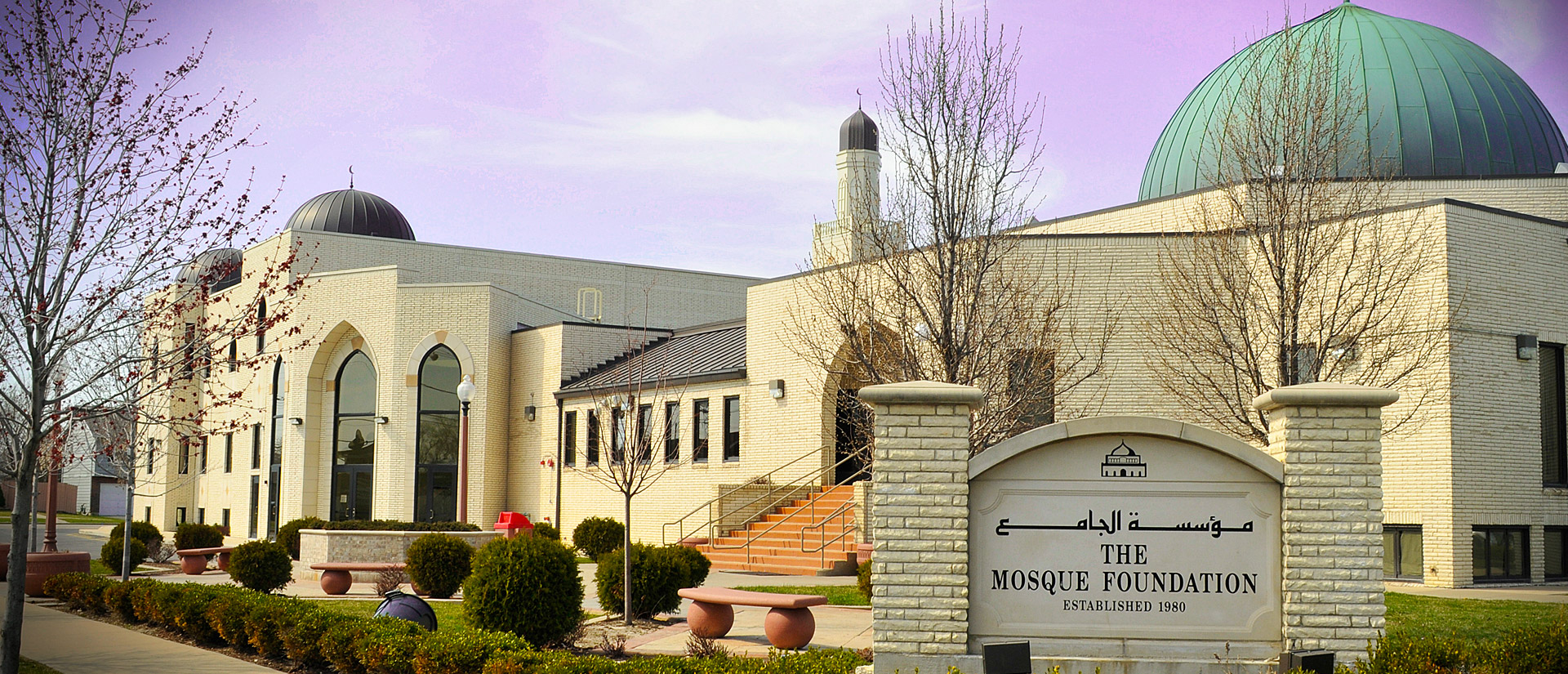
Mosque Foundation | Bridgeview, Illinois Logo
Mosque Foundation | Bridgeview, Illinois

Mosque Foundation

The Mother of All Migrations

First Friday Prayer is at 12:30pm. Second Friday Prayer is at 2:00pm.

The Mother of All Migrations

“Al Hijrah”  The Migration
It was a consensus among companions of the Prophet (PBUH) led by Omar (RAA) during the time of his ruling as Caliph to start the Islamic calendar by the great migration from Makkah to Madinah, known as “Al Hijrah.”
Among other suggestions was to start it from the birth of Mohammad (PBUH) since it represented the birth of the man who brought Islam and was a mercy to mankind. Another suggestion was to begin from the time Mohammad (PBUH) received revelation at the age of 40 since it marked the connection and celebration of the Word of God brought down to earth. Even beginning from the prophet’s death (PBUH) was also a suggestion. At the end, people ultimately agreed on “Al Hijrah” as the beginning since it was an event all Muslims were part of. It was an incident that represented the birth of a new chapter in Islam and Muslim life. And with such a choice, it eliminated the possibility for people to praise their prophet (PBUH) in a different way other than being a man and a messenger of God.
Obeying God and His Messenger
“Al Hijra” was about the response to the orders of God.  Muslims had trust in God’s orders that it would bring benefit to them and keep harm away, for He (SW) is the most aware and All-Knowing with All-Wisdom.
“Al Hijra” represented the test of their faith, the preservation of the community, and it planted the seed for a brighter future for Islam and Muslims. Thirteen years of living Islam in Makkah paved the way for such a decision to be taken, and Muslims acted upon it without any hesitation and migrated. The verse came questioning the lack of those who will hesitate to offer such a sacrifice to safeguard their faith even if it meant leaving their place of residence! God (SW) said: {as for those whose souls the angels take while they are wronging themselves [in the midst of unbelief, the angels] will say to them: In what [state of faith] were you [in life]? They will say: We were [utterly] helpless in the land. [The Angels] will say: Was God’s earth not spacious [enough] for you to migrate therein, [away from unbelief]? It is these, then, whose [final] abode shall be Hell- and what an evil destination it is} 4:97.
Al Hijra and Prophets before
“Al Hijra” was not something new. Prophets and messengers have always migrated for their right to worship God and to safeguard their faith. Stories of migration helped companions of the Prophet understand the types of sacrifices they had to offer for the sake of preserving their faith. In the Quran, God spoke about Abraham’s migration: {so [his nephew] Lot believed in him, whereupon [Abraham] said [to his people]: Indeed, I am migrating to my Lord. For, indeed, it is He [alone] who is the Overpowering [One], the All-Wise} 29:26.
Prophet Jacob and his family migrated to Egypt, and Prophet Moses and his people migrated from Egypt to the desert and then to Palestine. All these stories were meant to keep the faith of the companions of the Prophet high and bring tranquility to their hearts while facing all kinds of challenges around them. God (SW) said: {yet all that We relate to you, [O Mohammad,] from the tidings of the messengers [who preceded you], is but to set firm your [own] heart. For in this [surah], the [revealed] truth has come to you- along with an [inspired] admonition , and a reminder [of the way of God and His messengers] for the believers} 11:120.
“Al Hijra” and worshiping God
People have many reasons for migrating like money, education, adventure or even safety. Migrating for the sake of worshiping God is by far the most honorable one because it relates to the essence of your existence. We read in the Quran about our purpose in life which is “to worship God;” {and [know that] I have not created [either] Jinn or human beings but [to know and] worship Me [alone]} 51:56. If we are prevented from that, it becomes an obligation to seek a place for the preservation of our purpose in life. The order for Muslims to migrate was to ensure the protection of their faith and the right to worship God freely. To bring attention to the importance of worshiping God, He (SW) declared that persecuting people against their faith is by far worse than killing! God (SW) said: {for persecution is [far] more grievous than killing} 2:51.
Muslims migrating toward Abyssinia or Yathrib were trying to practice their faith. Abyssinia represented a land of justice where Muslims were able to worship God freely. The Prophet (PBUH), directing people to migrate to Abyssinia, said: “[why not] leave to the land of Abyssinia for in it is a king in which no one [under his rule] shall be wronged.”[1]  In Yathrib (later named Madinah), the Muslim community grew large by the dedication of Musa’b son of Omair teaching Islam. When the Prophet (PBUH) arrived in Madinah, the city was already established to be a minaret of justice, equality and freedom, and such themes were the values that represented the concept of worshipping God next to (Tawheed) or monotheism.
Al Hijra and sacrifice
The prophet (PBUH) when leaving Makkah said: “by Allah I know you [Makkah] are the best land of God and the most beloved to Him and if it wasn’t that your people [forced] me out I would not have left.”[2] All those who left Makkah had to sacrifice their place of birth and residence. Another dimension of sacrifice was in relation to money and wealth. The great companion Suhayb “the Roman” was followed by pagans demanding his wealth when he took the migration trip. He told them about the place of his wealth and gained his safety to follow the prophet to Madinah, and when the prophet (PBUH) saw him, he said: “Aba Yahya [a] winner in his trade [you are].”[3]  Allah (SW) revealed a verse in such a great sacrifice: {yet there are among people those who would give their [very] souls in seeking the good pleasure of God- and God is all-kind to [all His] servants} 2:271.
Being separated from family was a third dimension of sacrifice during Al Hijrah. Abu Salamah had to migrate with his wife and child for the sake of Allah, but his wife’s family forced her to stay in Makkah with her child leaving Abu Salamah to migrate alone! Abu Salamah’s family came to his wife and demanded the child to stay with them! A family torn apart with a mother who would cry standing by the road leading to Madinah for a whole year away from her husband and son but she couldn’t leave!  A husband and a father in Madinah alone! And a son away from his parents! All these stories of sacrifices relate the price Muslims were willing to take for the sake of saving their purpose in life, worshipping God.
Al Hijra and protection
“Al Hijrah” was a reminder of God’s guardianship. At the cave of Thawr, Abu Bakr told the Prophet (PBUH) in fear of being seen: “if someone looked by his feet he will see us!” The Prophet (PBUH) replied: “what do you think O Abu Bakr of two in which Allah is their third!”[4]  When the pagan Suraqa son of Malek came pursuing to kill the prophet to win the ransom, the Prophet (PBUH) told Abu Bakr: “do not grieve, for, indeed God is with us.”[5] Suraqa would later give up on pursuing the killing of the Prophet (PBUH) and became a Muslim!
Al Hijra and Tawakkul
“Al Hijra” was a lesson about planning and depending on Allah (Tawakkul) which included using the means needed to do something and then relating all matters to God. You can see that in how the Prophet (PBUH) planned for his trip. Ali his cousin sleeping in his bed in Makkah, two camels prepared by Abu Bakr for the long trip, leaving at noon when heat kept everyone indoors, going south instead of north in the opposite direction to Madinah, staying in the cave of Thawr for three days until things calmed down, having a shepherd bring his sheep to cover tracks, Asma’ daughter of Abu Bakr bringing food, trusting a pagan to lead him to Madinah and keeping secrecy during the trip in which Abu Bakr would not speak the prophet’s name but to only say he is a guide etc. All this was a plan for a trip that the Prophet (PBUH) took with full faith that God (SW) will protect him! It is indeed “Tawakkul” which brings together the use of means available and relying on God in all your matters.
Al Hijrah the trip that changed the world
From such a trip 1433 years ago, Islam became a reality in many parts of the world with followers of diverse ethnicities, cultures, colors and languages. All followers shall remember “Al Hijrah” the trip that changed the world and was the reason for them to become Muslims.
Muslims should honor the prophet (PBIH) by believing in him, practicing his Sunnah and looking up to him as the role model for all the matters of life. Muslims should honor the prophet’s companions by learning from their experiences, understanding Islam through their understanding and remembering them in (Dua) supplications.
In many parts of the world people are still migrating for all kinds of reasons. Palestinians are still in millions as refugees away from their homeland, Somali people are migrating to seek a life free from drought and hunger, Syrians are migrating for safety, and the list is long!
“Al Hijrah” changed the world for the Prophet (PBUH) and his followers and brought them back to Makkah safe and secure. I pray that present migrations will bring better conditions for people migrating and that the whole world can celebrate soon by going back to their homes safe and secure.  Ameen.
Sh. Kifah Mustapha
[1] Hadith narrated by Albani
[2] Hadith narrated by Ibn Abdel Birr
[3] Hadith narrated by Al Wadi’ie
[4] Hadith narrated by Al Bukhari
[5] Hadith narrated by Al Bukhari
Heaven (Part 2)

Kifah MustaphaHeaven  (Part 2)
Road to Heaven
Believe and worship God alone
The foundation of the House in Heaven is to believe and worship the One and only God – Allah (SW).  This is the truth that if ignored or not practiced would deprive the person from Heaven, for we owe Allah to recognize this fact and act on it. Allah (SW) denounced people’s choices of worshipping deities of falsehood and ignoring all the signs that speak of the One and only God; {then is it in false (gods) that they will believe, while in the blessings of God they disbelieve} 29:67. That is why Allah (SW) spoke about those unworthy of His forgiveness (SW) thus His Heaven because they fell into (shirk) associating partners in worship with Him. He (SW) said: {indeed, God will not forgive associating any god with Him} 4:116. He (SW) also said: {very truly they have disbelieved who say: Indeed, God, Himself, is the messiah, son of Mary. While the Messiah (himself) said: O Children of Israel: Worship God, my Lord and you Lord! Indeed, as to anyone who associates gods with God, then truly God has prohibited for such a one the garden (of Paradise). And his abode shall be the Fire (of Hell)} 5:72.
Righteous Deeds
In many references in the Quran and the Sunnah of the Prophet (PBUH), you will see Heaven as the reward for those who verified their faith by the good righteous deeds. It is a clear indication to what is known of the true definition of faith where the Prophet (PBUH) said: “indeed, faith is not by wishes or descriptions but it is what settled in the heart and verified by actions (of good deeds.)”
Among many verses in the Quran that assured this fact is this one: {as for those who believe and do righteous deeds, for them there are the Gardens of Paradise (awaiting) as an (everlasting) hospitality Therein they shall abide forever. Therefrom, they shall never seek removal} 18:107/108. And another verse is: {whoever does righteous deeds, whether male or female, and is a believer, We shall, most surely, cause him to live a good life. Moreover, We shall, most surely, recompense (all of) them with their reward, (in accordance) with the very best they ever did} 16:97.
Righteous deeds are of many forms. Allah (SW) gave us a variety of good deeds leading to His pleasure and His reward of Heaven. Some of these good deeds are obligations, like the five daily prayers, fasting, charity or pilgrimage, and some are voluntarily, like extra prayers, reading Quran, asking forgiveness, etc.
Love and Mercy
Faith is love. Faith is not information to be memorized, but rather a feeling that reflects righteousness of the character, words and actions of individuals. The heart that feels love for Allah lives and experiences this feeling with the world around. Imam Qurtubi in his interpretation of Surat Al Asr explains the verse where it says: {and exhort one another to (uphold) the truth} by saying: “Love (each other) and remind each other.”    Look at how the Prophet (PBUH) related faith to love to Heaven! He (PBUH) said: “You shall not enter Heaven until you believe; and you will not believe until you love (one another); Shall I tell you of something to do to make you love each other? Spread peace among you.”
Mercy goes along with love because the heart full of love shall reflect mercy on others. In the Quran, Allah (SW) reminded us about such an important combination. Describing Himself, Allah (SW) used the two attributes: {yet He (alone) is the All-Forgiving (One), the All-Loving} 85:14, and forgiveness is one aspect of mercy. When describing the relationship between a husband and wife, Allah mentioned the combination of love and mercy, Allah (SW) said: {and of His (wondrous) signs is that He has created for you, from yourselves, mates, so that you may repose in them. And He has set between you genuine (mutual) love and (tenderhearted) mercy} 30:21. And when describing His messenger’s heart (PBUH) He (SW) related mercy to the Prophet’s ability of love, not harshness or hard-heartedness. Allah (SW) said: {and so, (O Mohammad), it was by the sheer mercy of God that you were lenient with them; for had you been harsh and hard-hearted, then they would have disbanded from around you} 3:158.
Patience
Reaching Heaven shall not be a simple easy task. The reward is great, and for that the sacrifices must match. If we don’t have patience we cannot sacrifice and reach Heaven. It was Allah’s wisdom for Heaven to be earned not given free. The Prophet (PBUH) narrated that when Allah created Heaven and Hell, He sent Gabriel to Heaven and said to him: “Look at it and to what I have prepared for its people in it.” Gabriel looked and said: “By Your Greatness no one hears about it but shall enter it.” Allah then ordered for Heaven to be surrounded by hardships and said to Gabriel: “Go back to it and look to what I have prepared for its people in it.” Gabriel after looking said: “By Your Greatness, I am afraid that no one would enter it.”
With all these challenges and hardships on the path to Heaven, only patience shall make us prevail. We must never forget that all these hardships are fair and can be handled because Allah (SW) would not burden us with something we cannot bear. Allah (SW) said: {God does not task a soul beyond its capacity} 2:286.
Allah is pleased with you; are you pleased with Him (SW)
In Heaven the combination of the physical and spiritual pleasure come together to prevail in a perfect life that everyone should look forward to. But the most important type of pleasure is the one that relates to how Allah (SW) thinks about you; it is greater (Akbar) and magnificent. He (SW) said: {God has promised the believing men and the believing women Gardens beneath which rivers flow, wherein they shall abide forever- and (therein shall they have) good (and pleasant) dwellings in a Garden everlasting. Yet the pleasure of God is greater (still)! Assuredly, it is this that is the magnificent triumph} 9:72. Allah (SW) tells us that He (SW) cares about our feelings although He (SW) is not in need to any of that at all. It is just through the love from Allah (SW) to His servants that such verses could be understood; Allah (SW) said: {God shall say: This is the Day when the truthful shall benefit from their truthfulness. For them are Gardens beneath which rivers flow- wherein they shall abide, forever and ever- God being well – pleased with them, and they well – pleased with Him. That is the magnificent triumph} 5:119.
Your supplications should always be:
{My Lord! Build for me near You a house in the Garden (of Paradise)} 66:11.
Sh Kifah Mustapha

Our Tongues and a World of Choices

Kifah MustaphaOur Tongues and a World of Choices
The tongue is one of the most important organs of our body for it relates to our responsible status toward God called “Takleef” in Arabic. The most important function of our tongue is to utter words, but the choices we make in such words decide who we are and what we want and even where we will be in the Hereafter!
Muaz, son of Jabal (RAA), came to the Prophet (PBUH) to ask about an act or a deed that will gain him entrance to Heaven and distance him away from Hell. The Prophet (PBUH) answered in many areas of good deeds such as faith, prayer, fasting etc., but at the end he said, “Should I tell you of the control for all that?” Muaz said, “Yes!” The Prophet (PBUH) said, “Halt (the effects of) this” (while holding his tongue with his fingers) “on you!”  Muaz said,“O Prophet of Allah! Are we responsible for what we say?” The Prophet (PBUH) said, “May your mom cry for you[1]!”[2] O Muaz, what else throws people into fire on their faces or their noses but the harvest of their tongues.
For such a prominent role of the tongue, the Prophet (PBUH) said that all other organs of the body make a call everyday to the tongue asking it to fear God through them. They say, “Fear Allah in us for we are by you (what you say,) if you are straight we will be straight and if you are crooked we will be crooked.”[3]
Allah (SW) reminded us about the fact that all our words and actions are recorded by special Angels assigned for just that task.  {Behold! The receiving- [angels] receive – one on the right and one on the left- seated, [giving heed]. Not a word does one utter, but that with one is a ready observer}50:17/18. That is why if we were to talk, the prophet (PBUH) advised us: “Whoever believes in God and the Day of Judgment, let him speak of good or be quiet.”[4]
People need to think before speaking for they might utter words of harm which can never be removed. Such words can cause harm to oneself or to others. How many times were wives divorced, or family members quit visitations to other family members, or friends stop speaking to each other, and many more examples because of words that were spoken without thinking? Some of these words will cause the person liability on the Day of Judgment! The Prophet (PBUH) said, “The person will speak a word (causing) the anger of God believing that it is of no big deal but would drop him in Hell for seventy (years) autumns.”
Some Illnesses of the Tongue
Lying
Lying is by far the most evil act of the tongue. It deceives people, introduces you as a fake person, causes others to lose trust in you and ultimately will lead you to Hell! When the Prophet (PBUH) spoke about the character of a hypocrite he mentioned three things relating to lying. He said, “The signs of (verifying) hypocrites are three: if he speaks, he lies; if he promises, he breaks his promise; and if he is trusted, he betrays.”[5]
Lying comes in levels. The worst type of lying is to lie about God or His messenger. Allah (SW) promised severe punishment to those who change His words and deceive people about revelation. Allah (SW) said: {So woe to those who write the Scripture with their own hands and then say: This is from God [They do so] to obtain thereby a small price. So woe to them for what their hands have written! And woe to them for what they earn [from it]!} 2:79. The prophet (PBUH) said: “Whoever lied intentionally on my behalf, let him (be assured) a guaranteed place in Hell.”[6]
Regular lies are considered major sins in Islam that people need to repent from and seek God’s forgiveness. Allah (SW) considers lying as an abhorrent act, He said: {O you who believe! Why do you say what you do not do? It is greatly abhorrent [in the sight of] God that you say what you do not do} 61:2. The Prophet (PBUH) said that lying would lead people to Hell! He said, “Beware of lying! For lying leads to wickedness and wickedness leads to Fire! And the person would lie and keep lying until he is documented by God as a liar!”[7]
Backbiting
Backbiting is an attack on people that causes harm. A Muslim should not harm others or attack them physically or verbally.  The matters of people are something of privacy and sacredness that should be protected from our tongue’s backbiting. The same way that we would not want to be the subject of people’s conversations in backbiting us, we must not do that to others.  That is why God compared it to eating the flesh of your brother! Allah (SW) said: {Nor shall you backbite one another. Would any of you backbite like to eat his dead brother’s flesh? You would, most surely, abhor it. So fear God. Indeed, God is all-relenting, mercy giving} 49:12. The prophet (PBUH) said, “Backbiting is worse than adultery.”  People said, “How is it that backbiting is worse than adultery?” He said, “A person might fornicate but repents and Allah would accept his repentance, but one backbiting would be held until the other person forgives him.”[8]
Foul Words
Words of bad language speak of who we are! It hurts the ears and conscience of decent people. We are now living in a time where bad language is presented as the norm in TV shows, movies, sport arenas, etc. Moreover, we are seeing a language of foul words growing in texting and social media with no sense of such language being wrong or evil! Recently, I pointed out to someone that using bad language in social media is wrong, even typing it or abbreviating it, so why would someone make this choice?  The person’s reply was that “everyone does it!” Only people of righteousness would hold on to values based on the morals in Islam and avoid the temptation to fall into such low ends of language just because it is practiced out there!
The prophet (PBUH) said when describing the Muslim: “A Muslim is not the one who (speaks) curses, inflicts (false accusations) and uses foul and bad words.” [9]  Also the prophet (PBUH) said, “People who curse will never be people of intercession at the Day of Judgment.”[10]
False Statements
Among the worst things your tongue can do is to witness in a session like a court with a false statement, especially when you are under oath by God! People could be accused or jailed or punished because of such false statements, and this will indeed drag the liars into Hell on the Day of Judgment. The prophet (PBUH) said, “The false statement of a witness is equivalent to (shirk) associating someone else with God in worship.”[11]
When asked about the worst of the major sins he (PBUH) replied, “Associating in worship someone else with Allah, being ungrateful to your parents, and the false witnessing statement.”[12]
A false oath in the name of Allah is given a name by the Prophet (PBUH) as (Al Yameen Al Ghamoos) meaning the “dipping oath” because it will dip you into Hell!
Humiliating Words
Humiliating words are a sign of a disease in the hearts of people as being arrogant and ignorant. When people humiliate others they assume they are superior to them and have the right to look down on others. The prophet (PBUH) said, “It is enough of evil from a Muslim to humiliate his Muslim brother.”[13]
Unfortunately, many people regularly practice using humiliating words even to their own family members. Sometimes parents intend to cause humiliation to their children if they fail to live up to their expectations! Spouses use humiliating language against each other! Nations make fun of other nations by using words of humiliation, and this is all Haram!
In conclusion, the Muslim should fear Allah in the choice of words he or she says. Everyone will report to Allah on the Day of Judgment, and even if Hasanat were present they could easily be wiped out because of the poor choices of our words. The Prophet (PBUH) asked his companions, “Who is the bankrupt?” They said, “One with no dirham or belongings!” He said, “The bankrupt from my Ummah would bring prayers, charity and fasting on the Day of Judgment, but he comes with foul words towards this (person) and false accusations towards this (person), and he ate the money of this (person) and hit this (person)! Each one he wronged will be given from his Hasanat, and if his Hasanat were wiped out before he pays what he owes, their sins will be taken from them and thrown over him and he would be thrown into fire.”[14]
Sh. Kifah Mustapha
[1] An Arabic term meaning: how could you not understand it!
[2] Hadith narrated by Imam Tirmizi through Muaz Ibn Jabal
[3] Hadith narrated by Imam Munziri through Abu Said Al Khudari
[4] Hadith narrated by Imam Bukhari through Abu Hurayrah
[5] Hadith narrated by Imam Bukhari through Abu Hurayrah
[6] Hadith narrated by Imam Muslim through Al Mughira Ibn Shubah
[7] Hadith narrated by Imam Muslim through Abdullah Ibn Masoud
[8] Hadith narrated by Imam Baihaqi through Abu Said Al Khudari
[9] Hadith narrated by Imam Ahmad through Abdullah Ibn Masoud
[10] Hadith narrated by Imam Muslim through Abu Darda’
[11] Hadith narrated by Imam Ahmad through Ayman Ibn Khuraym
[12] Hadith narrated by Imam Bukhari through Anas Ibn Malek
[13] Hadith narrated by Abu Daoud through Abu Hurayrah
[14] Hadith narrated by Imam Muslim through Abu Hurayrah
Sh. Kifah Mustapha

Coping With Grief

Kifah Mustapha
Coping With Grief 
 
Tears were coming from the Prophet’s eyes upon the death of his son Ibrahim. His companions asked of such a matter, assuming that being a prophet meant a level of faith that is solid and strong in which submission to the will of God by accepting death means the absence of such feelings and emotions! The Prophet (PBUH) said, “The eye shall cry and the heart shall be sad and we shall say only what pleases our Lord. By God O Ibrahim we are by (your loss) in sorrow.”  In simple terms, the Prophet (PBUH) was grieving and it was ok to cry.
 
Loss is hard to cope with and no one can deny that. Pain shall be felt and grief might be prolonged the closer you are to the one who died. My mother’s picture stayed on my computer screen for about four months after her death. I rarely have dreams, but after her death I saw her almost every week at least once in my dreams! I remember reading a statement a few months after her death that said: “A man will always feel young until his mother dies.” I was so touched by that statement, and I was overwhelmed with a feeling of loneliness.
 
In these lines I will share my own perception about coping with grief as there is no standard formula that works for all. Each person is a unique blend of feelings, emotions and character, and because of that each one would need his own personal way to cope with grief. Maybe some readers will be seeking answers to their own grief, as I am still trying to cope with my own grief by writing this article. I just hope that my experience might be an insight to others in one way or another. For me it was faith, time and social support that helped me cope with grief.
 
I am an Imam in a very busy Mosque in Chicago. Every year we have an average of 100 to 120 funerals; that is around two funerals a week. I attend the wakes prior to the burials; I lead prayers in the funeral; I join the family at the cemetery; I follow up with a visit offering condolences after the burial; and each time I speak words of comfort that I hope will help people cope with their grief. I thought I was ready for my own grief scenario, but I was not!  It hit me so hard and left me in a state of shock. Three days after I flew back to the US from Lebanon, where I had been staying with my cancer battling mother, she died. For the first moment I was in denial, I could not believe what I heard! I remembered how great companions of the Prophet (PBUH) did not believe his death!  I did not feel that I was any less of faith but rather going through what a normal human full of love would react to the loss of the one he loves the most.
 
I know I am a believer, I submit to the will of God. I am a Muslim who truly believes in Divine Destiny (Qadar), but I had to be alone to cry and process things by myself. That was my personal way of dealing with grief. My faith eased this wave of being in shock for I remembered that even though I had my mother for as long as I remember, I knew she was not mine. She was His, and He (Allah) decided to take her back to Him. I said what I believe is the truth: {To God we do belong and to Him we are returning} 2:156.  I believe in eternal life and that death is the end of this phase on earth, but it is also the beginning of another in the grave connecting to the Day after. It will not be long until I will join her in Heaven (God willing).  Heaven was meant to be the true life of eternity, pleasure and comfort. This is how my faith helped me cope with my grief.
 
Time, for me, meant healing by utilizing time through good deeds. I sought refuge using time in the remembrance of God, reading the Holy Quran, visiting her grave (yes, I flew back the same day to Lebanon), making supplications for her, and yes, looking through all the photo albums we had in our family house with her pictures in it. I used my time in things that made me feel I am honoring her. I asked my sister to cook my mother’s favorite food for me. I visited the people, especially family members, she liked to visit. I gave money to all those in need who used to visit her every year after Ramadan to ask for donations, and I asked them to make supplications (Dua) for her. I missed her a lot and I still do.
 
Having all the family around me during the days of condolences helped me a lot. There was one thing in common between all of us, we all loved her and we all missed her. People shared their memories, beautiful days and hard days, and I felt that she is still inside each one of us; the feeling of loneliness was not as hard on me at that time. The presence of family and friends brought peace to my heart.
 
Almost three years after her death now she is still remembered as the greatest gift God gave me besides being a Muslim. My grief was and is still a reminder that I am a human being, a son and a believer. To all those who have lost a mother, a father, a child or any person close to them; I hope and pray that you will be able to cope with your grief and that you may find peace in ways that comfort you.
 
{O peaceful soul! Return to your Lord, well-pleased and well-pleasing. And so, enter among My [beloved} servants. And enter My [Everlasting] Garden} 89:27/30. 
 
Sh. Kifah Mustapha
 

I Bear Witness

 Kifah MustaphaI Bear Witness
Al Shahadah[1] means that a person has witnessed through knowledge and faith the truth behind life. It is the conclusion about what identifies you as a human in your notions about life and the purpose of existence. It is of two parts; one is to believe that there is no god but Allah, and the second is to believe that Mohammad (PBUH) is the messenger of Allah.
The first part:
It is a statement of submission to the fact that behind all that exists is a Lord Who created everything, and that He (SW) is One in His entity, the only One worthy of worship alone, and that He (SW) is described in names and attributes of ultimate perfection.
Shahadah is the demonstration of the articles of faith[2] as being part of someone’s belief reflecting on his character.  When someone looks around and sees everything as a sign of the One God (Allah SW), it will be a witness on such a fact settling in the heart; the declaration of Shahadah would then mean that this person acknowledged the truth and became among those recognizing and believing in it.
Shahadah is originated in one’s conscience; the Prophet (PBUH) said: “Never a born (baby) but is born on (Fitra.)” [3]  Everyone can testify to the feeling of right or wrong felt within when encountering choices in life. This is part of our creation; Allah (SW) said: {and (by) the soul and Him who fashioned it and informed it with (consciousness of) its wickedness and its righteousness} 91:7/8. Shahadah being the ultimate truth is a natural feeling that God has made part of our creation; Allah (SW) said: {now, behold! Your Lord took from the Children of Adam- from their loins- (all the souls that would become) their posterity. And He made them bear witness to their own souls- (saying to them  Am I not your Lord? They said: Oh yes, indeed} 71:172.
Shahadah is a statement of rejection of all false deities that are worshipped other than Allah (SW). No one can settle on the truth that God is God unless he sees there is no other god at all. In other words, you have to reject all the false deities as part of accepting faith in God the One. That is why Allah (SW), just after the greatest verse in the Quran (Ayah Al Kursi), said: {there shall be no compulsion in religion! For truly rectitude has been made clearly distinct from perversity. Thus whoever disbelieves in false deities and believes in God (alone) has truly grasped the firmest handhold, which is forever unbreakable} 2:256.
Shahadah means that all acts of worship are to be to God alone. It is not enough to believe that there is God! Pagans at the time of the Prophet (PBUH) did accept that fact but they fell into (shirk) associating other deities with God through their acts of worship; Allah (SW) made it clear that all acts of worship are for Him alone and that the claim of praying to idols or individuals, even if only to reach out to God, is an act of (Kufr) disbelief; Allah (SW) said: {For, most surely, it is God (alone) that the (true) religion of purity belongs. For those who have taken patrons apart from Him (say): We do not worship them for (any) other (reason) than (that through their intercession) they draw us nearer to God in (spiritual) station. Indeed, God will judge between them (all) about that which they dispute. Indeed, God does not guide one who is a liar (and) a relentless unbeliever} 39:3.
Associating other deities in worship with Allah (shirk) include many other forms like: making supplications to someone else other than God; making an oath by someone other than Allah; believing that someone controls your life other than Allah; accepting the idea of God being more than one entity; and many other different forms.
Shahadah should be based on the true knowledge that transforms into a belief in the heart and mind, not just seen as a piece of information! Many people who study Islam are not Muslims, and they learn about this truth yet it is just information for them, not a belief that shapes their lives. Allah (SW) used the term (to witness) in a different verse relating it to the true knowledge that represents faith and belief when He (SW) said: {so all those that they call upon apart from Him hold no (power of) intercession. Excepted are those (of God’s servants, whom He permits to intercede, and) who bear witness to the truth- and they know well (from Him for whom it may be made)} 43:86. Those who say words that they do not know what it really means or did not accept the truth it brought with it will not benefit from such statements.
Shahadah should reach a level of knowledge that is of certainty with no place of doubt. Abu Hurayrah (RAA) narrated that the Prophet (PBUH) told him: “Whoever you meet behind this wall who bear witness that there is no god but Allah with certainty in his heart, give him the glad tiding (that he is promised) Heaven.”[4] Allah (SW) conditioned certainty to faith because what people are reminded of is the ultimate truth that should leave no trace of doubts whatsoever! Allah (SW) said: {as for the (constant) believers, they are those who believe in God and His messenger, and who do not have any doubt (about their faith), and who strive with their wealth and their persons in the path of God} 49:15.
Shahadah should be a sincere and honest statement that separates believers from hypocrites. When a person asked about another (person) by the name of Malek Ibn Al Dakhshen, a third said: “That is a hypocrite who does not love Allah and his Prophet! The Prophet (PBUH) said: “Don’t you (hear him) say that he says: there is no god but Allah with a sincere intention for the sake of Allah!” They said: “Yes.” The Prophet (PBUH) said: “No one meets Allah at the Day of Judgment with this but Allah will prohibit fire on him.”[5] From this Hadith we can see that the condition needed for the statement of truth (Shahadah) that will enable people to enter Heaven is sincerity. Allah (SW) also spoke about those who embraced Islam publically while their hearts kept rejecting it, and for that they were true hypocrites. Allah (SW) said: {now, there are (also) among humankind those who say: We believe in God and in the (coming Judgment of the) Last Day! But they do not truly believe. They seek to deceive God and those who believe. Yet they deceive non but themselves, though they do not perceive (it)} 2:8/9.
The second part:
Shahadah is a statement of believe in the mercy of God that He (SW) did not leave humanity without guidance. He (SW) sent messengers to teach people their purpose in life[6] and that the last one was messenger Mohammad (PBUH.)
Mohammad (PBUH) had to be the last messenger for his message is the final one that humanity is in no need for any new revelation. Allah (SW) said: {this day: I have perfected for you your religion! And I have completed My grace upon you! And I am well-pleased for you with Islam- (The Peace)-as your religion} 5:4. The revelation be it Quran or Sunnah introduced humanity to everything needed to live honorably in this life and the Hereafter.
The name Mohammad (PBUH) is referred to a human being with no divine entity whatsoever.  He was a man well known for being honest and trustworthy who grew up in Mecca from the tribe of Hashem, married to Khadijah and engaged in some business before receiving revelation at the age of forty.  Allah (SW) spoke on his behalf identifying the Prophet (PBUH): {Say to all people, O Prophet): Indeed, I am only a human being like you. It is revealed to me that, indeed, your God is (only) One God} 18:110.
Shahadah means to recognize Mohammad’s message (PBUH) and that he is the chosen one as the final messenger. When people questioned why it was Mohammad (PBUH) to receive revelation, Allah (SW) answered back by saying: {(yet it is ) God (who) knows best where to place His message} 6:124. Since Allah (SW) is the creator then He can choose whomever He wishes. The Prophet (PBUH) was the true respondent to the orders of Allah, and his main mission in life was to deliver the message sent to him and he (PBUH) did that and fulfilled the responsibility given to him; Allah (SW) said: {O Messenger! Proclaim all that has been sent down to you from Your Lord. For if you do not, then you will not have conveyed His message} 5:67. With the Quran being the miracle that came with him (PBUH,) it was indeed a clear indication of the choice and the proof that Muhammad (PBUH) was His last messenger.
Shahadah means to believe that Mohammad (PBUH) came speaking the truth and that all his words and actions were immune from any defect. The term (Ismah) or immunity was part of his character, and Muslims believe that all his words and actions were secure; Allah (SW) said: {nor does he speak of (his own) desire. It is only a Revelation revealed} 53:2/3. That is why Shahadah means to follow Mohammad (PBUH) in all he did for he (PBUH) is the one representing the path of truth from Allah (SW) and demonstrating it through his lifestyle. If the Quran was the word of God that represented the guidance in text, Mohammad (PBUH) was the guidance through his actions implementing the Quran in reality. Allah (SW) said: {yet, very truly, in the Messenger of God there is an excellent model for you- for whoever has hope in God and (for salvation on) the last day and, (therefore), remembers God much} 33:21.  Allah (SW) made clear that the love of Allah is conditioned by following the path of Muhammad (PBUH); Allah (SW) said: {(O Muhammad,) say (to the believers): If you love God, then follow me. God will love you and forgive you your sins} 3:31. Allah (SW) also reminded us about the liability of being astray from his path (PBUH); Allah (SW) said: {then let those who go against His command (or that of His messenger) beware! For a trial may well afflict them (in this world). Or a most painful torment may afflict them (in the Hereafter)} 24:63.
Finally:
Shahadah, with its two parts, represents the declaration of Islam by the individual. It is the verbal statement that brings a person into the world of submission to Allah (SW) and makes him a true follower of Prophet Muhammad (PBUH). It is not just a phrase to be uttered, but a commitment of all that comes with it. People at the time of Prophet Mohammad (PBUH) knew this fact and no one committed to Islam by saying such a phrase until he knew what it meant and what it required. Unfortunately many Muslims now want to claim the faith but not act on what it means! I hope that Muslims can see the beauty of the truth they carry in their hearts and make sure it echoes on all that they do, say or act upon.
Sh. Kifah Mustapha
[1] It is when a Muslim believes and declares that there is no God but Allah and that Mohammad (PBUH) is His messenger.
[2] It is to believe in God, Angels, Books, Messengers, Day of Judgment and Divine pre-destiny.
[3] Hadith narrated by Imam Bukhari
[4] Hadith narrated by Imam Muslim
[5] Hadith narrated by Imam Bukhari
[6] Allah (SW) said: {and (know that) I have not created (either) jinn or human beings (for any other end) but to (know and) worship (Me) alone} 51:56.
Sh. Kifah Mustapha

The Most Comprehensive Verse in the Quran

Brothers and Sisters,

Let us take this opportunity to reflect on a single verse from the Book of Allah. He (SWT) states in Surat An-Nahal, “Indeed, Allah orders justice and kindness and giving to relatives and forbids shameful acts and evil deeds and transgression. He admonishes you that perhaps you will be reminded.” (16:90)

Ibn Masood (R) describes this verse as the most comprehensive in the Quran. The entire range of Islamic teachings is condensed within this verse. It is for this reason that it was the practice of the Companions (R) to recite this verse at the end of every Friday Khutba.

Walid Ibn al-Mugheira (R) says of the verse, “By Allah, in it, there is a special sweetness. Above it, there is a unique light; leaves sprout from its roots and it bears fruits on its branches. These cannot be the words of a human being.”

In this great yet concise verse, Allah offers us three commandments and forbids us of three things. He (SWT) commands us to do justice, be moral, and maintain the bonds of kinship, and He forbids us from shameful acts, evil deeds, and transgression.

The Quran was revealed to all of mankind offering a comprehensive social order. It commands principles that protect and regulate the community. For this to happen, justice, which is the first order in this verse, must be established. This means placing things in their rightful place and giving others equal treatment. Justice must be the consistent factor in all transactions and interactions between individuals and communities regardless of strength, wealth, race, or gender.

We must be just in all of our matters and all of our relationships. As believers, we are just in our relationship with Allah (SWT), being grateful for all of His favors upon us through worshipping and obeying Him. We must be just to our parents through obeying them when we are young and showing them compassion and mercy in their old age. We must be just to our husbands and wives, fulfilling their rights upon us, and just to our children in providing for them and parenting them. We must be just in our dealings in the workplace, using the highest standards of professionalism and ethics. We must practice justice in the way we spend our time, wealth, and strength. Justice must infiltrate all our decisions and actions.

The second commandment in this great verse is al-Ihsan, perfecting our works or treating others with kindness. Therefore, justice is the foundation of our actions and kindness is what should naturally follow the implementation of justice. Imam al-Qurtubi explains that Ihsan in this verse refers to all types of Ihsan in morals and in deeds. In adhering to Ihsan, the believer is constantly self-assessing and reflecting over his or her decisions and actions striving for perfection. Ihsan in acts of worship is manifested through God-consciousness. Ihsan towards other humans and creation is defined by treating Allah’s creatures with the utmost kindness. Kindness is what strengthens a community and builds bridges within society.

The third commandment orders us to give relatives their due. This is a continuation of enjoining kindness with an emphasis on relatives. It is unfortunate that humans take their ties of kinship lightly, and often their enemies are family members. Allah (SWT) specifically mentions relatives in this comprehensive verse highlighting the importance of rectifying our relationships with our family, immediate and extended. This is a reminder to those who are Islamically obligated to protect and provide for their immediate or extended relatives, especially widows and orphans.

Also in the verse, Allah (SWT) forbids shameful acts. These are any acts which oppose the human’s natural tendency to be good and pure. These are acts that a person should naturally feel guilty about or fear that people might notice. Shameful acts can involve all human faculties, whether the heart, tongue, eyes, ears, or limbs. A believer must take strides to practice modesty which is the defining quality of faith by abandoning all shameful acts.

Allah (SWT) also forbids evil deeds, which are all sins, whether done in private or in public. Aside from our innate ability to distinguish shameful acts from pure acts, Allah (SWT) provided us with revelation that offers us regulations and rules to follow. What is halal is clear and what is haram is clear.

Finally, Allah (SWT) forbids transgression in the verse, referring to crossing limits set by Allah (SWT). This transgression leads to evil and chaos in society.  Therefore, Allah (SWT) prohibits it to protect humanity.

Allah (SWT), “admonishes us so that we might be reminded,” as He (SWT) ends the verse. In this single verse, Allah (SWT) reminds us of our innate nature to gravitate towards justice and kindness and to abhor shamelessness and transgression. But only those with conscious minds and sound hearts will truly heed His reminder. May Allah (SWT) make us among those who hear the truth and live according to it.

By Sh. Jamal Said

Heaven (Part 1)

Understanding Heaven
Heaven is the residence of luxury where Allah (SW) from His mercy rewards His servants on the Day of Judgment.  Many names were mentioned in the Quran about Heaven, including the following: Al Husna; Allah (SW) said, “And to each, God has promised great goodness” 4:95. Al Ghurfa; Allah (SW) said: “Such as these shall be rewarded with the (high) Chamber (of Heaven)” 25:75. Al Firdaws; Allah (SW) said: “as for those who believe and do righteous deeds, for them there are the Gardens of Paradise (awaiting) as an (everlasting) hospitality” 18:107.
Who Grants Heaven?
It is our core belief as Muslims that entering heaven is a gift from Allah (SW) not that we offered a price for it. Any good deeds we do are by origin a gift from Allah (SW) for He (SW) said: {though you have not even a (single) blessing, but that it is from God} 16:53. Allah (SW) also said: {they would bestow a favor upon you, (O Prophet,) by embracing Islam, say (to them): Do not regard your submission (to God) as a favor bestowed on me. Rather, it is God who bestows a favor upon you by guiding you to faith, if, indeed, you are truthful} 49:17. This is how we understand the famous words by Omar (RAA), when he said: “if one of my legs is inside Heaven and the other is outside I would not feel safe from the (supreme) plans of Allah.”[1] Omar is not mistrusting Allah’s plans; rather he is aware that his deeds would not be worthy to have him enter Heaven.
At the same time, Allah (SW) recognizes our efforts and accepts it from us, and He (SW) relates that as a reason He (SW) bestows His mercy on us and grants us Heaven. Allah (SW) said: {and they shall be hailed (to Paradise at the Day of Judgment): This is the Garden you are given to inherit for what you have done (in life)} 7:43. This is in harmony of His Just rule where He (SW) says: {and thus for each (group), there shall be ranks in accordance with all that they have done (in life), in order that He may fully recompense them for their deeds} 46:19. In simple words, He (SW) accepts our deeds even if they don’t rise to the price of Heaven but then through His mercy, He (SW) grants us Heaven.
What to expect in Heaven?
See Your Lord
The most honorable thing that a person would look forward to in Heaven is to see his Lord. This is the highest level of pleasure that someone could achieve; Allah (SW) said: {faces, on that Day, shall be radiant. To their Lord (alone) shall they be looking} 75:22. In another verse, Allah (SW) spoke about people who are evil and that part of the punishment for them is that they will miss the ability to see their Lord. Allah (SW) said: {no, indeed! (The Day of Judgment is true!) Most surely, on that Day, they shall be veiled from (seeing) their Lord} 83:15.
The Company of Mohammad (PBUH)
The honor of the company of the Prophet (PBUH) is another pleasure that people look forward to enjoy in Heaven. Sahabah who had a chance to see him in life could not imagine Heaven without his company (PBUH.) Rabee’ah Ibn Ka’b Al Aslami (RAA) said: I would sleep by the Prophet (PBUH), and I brought him his ablution (wudu) when he needed water (to clean himself), and he said: “Ask!” I said: “I ask for your company in Heaven!” He (PBUH) said: “Anything else?” I said: “That is all.” He (PBUH) said: “Help me by (controlling whims of) yourself through much prostration.”[2]
The ones who did not have a chance to see him during his life (PBUH) but have all the dreams to be granted this wish were remembered by the Prophet himself (PBUH) in this narration: “Ones who (carry the) most love (for) me among my nation (are) people that will come after me, one of them would wish to see me (sacrificing) his family and money.”[3] It is through loving the Prophet (PBUH) that such a wish will be true, insha Allah.
Perfect (never experienced) Pleasure
When trying to imagine pleasure we can only relate to familiar things in our surroundings and experiences. Many verses describe the lands, rivers, wells, castles, trees, gardens, fruits, sexual fulfillments and other pleasures in Heaven, and it brings a tiny preview of what one would expect to enjoy in Heaven.  But even when descriptions are mentioned, it is only in relation to language to aid our understanding but not in the true essence of what is in store for the believers since we lack the tools to comprehend such pleasures. That is why the Prophet (PBUH) said in the Holy Hadith that Allah (SW) said when describing Heaven: “I have prepared for my righteous servants what no eye has seen and no ear has heard or heart ever thought of.” Abu Hurayrah said: “Read if you wish: {thus not a soul (in the world) can (now) comprehend (the joys) that have been concealed (by God) for every one of them for all (the good) that they used to do (in life)} 32:17.
Eternity
Two things frighten humans a lot: illness and death. Muslims believe that humans were created to live forever but they just move from one phase to another. When humans die during this life they don’t vanish, rather they transform into a world of a (grave) barrier (barzakh) waiting to be called up again on the Day of Judgment for eternity to be experienced either in Heaven or Hell.
Eternity in Heaven is the utmost of pleasures to be enjoyed. Allah (SW) said: {(it shall be said to them:) Enter in peace! This is the Day of Eternity} 50:34.  Allah (SW) also said: {and they shall be hailed (to Paradise on the Day of Judgment): This is the Garden you are given to inherit for what you have done (in life)} 7:43.
No worries
Allah (SW) described the life on earth as full of travail, labor and responsibilities. He (SW) said: {O humankind- (for), indeed, you are (all) laboring to your Lord, most laboriously- then shall you meet Him} 84:6. Allah (SW) also said: {very truly, We created man in (a life of) travail} 90:4. In Heaven none of that will be experienced at all. Allah (SW) called heaven: “Dar El Salam” which means the residence of purity from any defects; {for them is the Abode of Peace, (in paradise) with their Lord} 61:27. In heaven, no grudges or illnesses of the hearts toward each other; {moreover, We shall strip away any malice that is within their breast. (Thus), as brethren, they shall be (reposed) on settees, (in the Garden of Paradise,) facing one another} 15:47. Heaven will be free from all words or actions of evil; Allah (SW) said: {moreover, therein they will pass to one another a chalice (of wine, stirring) no obscene talk or sinfulness therein} 52:23.
In the Hadith the Prophet (PBUH) also mentioned a person who was most tested in trials during life but will be dipped once in Heaven and asked: “Have you ever experienced hardships before?” he will say: “Never.”[4] This means that the pleasure he experienced in one dip made him forget all the troubles he faced during his life.
Sh. Kifah Mustapha
To Be Continued…
[1] Quote by Imam Al Subki “Tabaqat Al Shafeiah Al Kubra”
[2] Hadith narrated by Imam Muslim
[3] Hadith narrated by Imam Muslim
[4] Hadith narrated by Imam Muslim
Sh. Kifah Mustapha

Muslims and Illness

The Spiritual Understanding:
Muslims believe that their main purpose in life is to worship God at all times. Allah said: {and [know that] I have not created [either] jinn or human beings but to [know and] worship Me [alone]} 51:56. God promised His servants that if they connect to Him during times of ease, He shall connect to them in times of hardship. The prophet (PBUH) said: “seek to connect with Allah in times of ease; He will look unto you in times of hardship.”[1] From that understanding, Muslims try to think positively about illness and sickness as it draws them closer to their Lord.  This is evident in the following:
1.  Muslims understand that life is a test that can be of many dimensions including sickness, death, loss of property etc. Allah said: {and, most surely, We shall test [all of] you [believers] with something of fear and [with] hunger and [with] loss of wealth and life and crops} 2:155.
2.  Muslims honor life as an investment in righteous deeds even when sick or ill. The prophet (PBUH) said, “The best of people is one who lives long and perfected his deeds.”[2]. The prophet (PBUH) also said, “Let no one wish for death because of a hardship! If he (feels to) say something; let him say: O Lord (grant me) life as long as life is better for me and (grant me) death if death was better for me.”[3]
3.  A Muslim when encountering illness or hardships of any type would be urged to see it as a sign of love from God. The prophet (PBUH) said, “If God loves someone, He will test him.”[4] This love is evident in the following: Recognizing your need for God, erasing your sin and enjoying big rewards for being patient on your illness.
The Sacredness of Life:
In Islam life is considered a gift from God. No one has the right to harm life but through a court of law based on a crime that makes the person liable for punishment. Saving a life is one of the most honorable things a person can do and it is considered as if humanity is being saved. Allah said: {and whoever saves a life, it shall be [reckoned] as though he has saved the life of all humankind.} 5:32
A Muslim should Seek Cure:
Seeking cure in time of illness is something that Islam urges. The prophet (PBUH) said, “Allah has created illness and Allah has created cure; so (seek) cure.”[5]
Although it is known that a Muslim has the right to reject medical care if he/she chooses that, it is mandatory to seek medical care in cases of serious and treatable communicable diseases. The Council of the International Islamic Fiqh Academy’s stated that, “Seeking cure is permissible for references mentioned in the Holy Quran and the Sunnah of the Prophet (PBUH) and for preserving the entity (of a person) which is a theme in Islamic law. The ruling on seeking cure differs in relation to circumstances and people.”
1.  Seeking cure is mandatory if refusing it would lead to the destruction of the person or any of his/her body parts or if the disease carries harm to others like infectious diseases.
2.  It will be preferred if it leads to body weaknesses but does not lead to what was mentioned in the previous case.
3.  It will be neutral if it is not listed under the two previous cases.
4.  It will be hated if by doing it, fear of worse complications will happen than the illness meant to be treated.”[6]
Allah is the Healer:
Muslims understand that all healing is in the Hand of God and that medicine or seeking cure is just the tool.  Allah said [on behalf of Abraham]: {and He is the One who feeds me and gives me drink. And when I become ill, He heals me.} 26:79/80.
Healing in recitation of the Quran and supplications:
Muslims believe in the healing power of the words of God when recited next to an ill person. {Thus do We send down [in the verses] of the Quran that which is healing , and a mercy to the believers} 17:82. Some of the recommended verses from the Holy Quran during illness are: Chapter one, first five verses of chapter two, verse 255 of chapter two, verses 285/286 of chapter two, chapter 112, chapter 113 and chapter 114.
Some recommended supplications:
1.  “O Allah Lord of people; One who removes harm; bring healing; You are the Healer. No Healer but You; bring the healing that leaves no illness (behind.)”[7]
اللهم ربّ الناس مذهب الباس إشف أنت الشافي لا شافي إلا أنت إشف شفاء لا يغادر سقما
2.  The Prophet (PBUH) said: “Whoever visited an ill person and repeated by him seven times: (I ask Allah the Gracious, the Lord of the Gracious Throne to heal you) but will be healed from that illness.”[8] It means that part of the healing is using supplication.
أسأل الله العظيم ربّ العرش العظيم أن يشفيك
General Rules of Islamic Medical Ethics:
1.  Harm should not be removed by causing another equivalent harm or bigger. For example; it is not permissible to donate a kidney if the donor will be harmed equally or more than the donated recipient.
2.  Necessity overrides prohibition. For example; exposing a female body to a male is prohibited in Islam. Because medical care is a necessity, it will be permissible in such cases upon need.
3.  Removing harm has priority over bringing benefit. For example; removing a kidney because of the cancer in it so it will not spread to other parts of body overrides the benefit of keeping it.
4.  Public interest overrides individual interest. For example; if vaccines were mandated by authority, every individual must abide to prevent spreading disease even if it was against his self-interest.
5.  Harm is removed as needed. For example; unless it is certain that removing a whole lung is a must, only the part needed to be removed should be the case.
Sh. Kifah Mustapha
[1] Hadith narrated by Imam Bukhari
[2] Hadith narrated by Imam Tirmizi
[3] Hadith narrated by Imam Bukhari
[4] Hadith narrated by Imam Shawkani
[5] Hadith narrated by Imam Ibn Abdel Birr
[6] Annual seventh meeting in Jeddah May of 1992, www.fiqhacadmy.org.sa
[7] Hadith narrated by Imam Bukhari
[8] Hadith narrated by Imam Abu Daoud
Sh. Kifah Mustapha

Understanding the Term “Haram” or Forbidden Part 1

Looking at the way our community uses the term “Haram”, we cannot ignore that there is a sort of abuse in the use of the term. The abuse comes in two forms. One is that some people throw this term at anything they consider improper in their own personal, cultural or religious understanding. The second is that some people fail to label certain things clearly prohibited in Islam as Haram. I hope this article will bring a better understanding of this term and what it means.
The meaning of the term linguistically is “the opposite of permissible”[1] and in Islamic reference is: “that which is punished upon doing it.”[2] Allah (SW) used the term in many verses like: {Indeed, He has but forbidden you [to eat] carrion, and blood, and the flesh of swine}2:173; {God has made selling lawful and has prohibited usury}2:275; and {Yet forbidden for you [still] is [hunting] the game of the land- as long as you remain in the [state of] pilgrim sanctity.}5:96. The Prophet (PBUH) also used the term in the Sunnah. Ali Ibn Abi Taleb (RAA) narrated the Prophet (PBUH) held (pure) silk in his right (hand) and gold in his left (hand) and said, “These two are forbidden for males from my Ummah.”[3]
Looking into the references in both Quran and Sunnah, we must state some facts:[4]
“The origin of all matters is permissible.” In support of this understanding, we can site the verse: {Do you not see, [O humanity,] that God has subjugated for you all that is in the heavens and all that is in the earth and has showered you with His blessings- manifest and hidden?} 31:20. Also, the Prophet (PBUH) said: “That which God made in His Book as lawful is (the) lawful and that which He made forbidden is (the forbidden) and that which He was quiet about it is (aafou) pardoned.”[5] This means that to declare something prohibited there must be a text of revelation with two conditions: authenticity and clarity. If quoting from the Quran, the matter of authenticity is secure but we need to consider the language and its meaning. If quoting from the Sunnah we need to consider both authenticity and language interpretation. As a community, in many cases we call something that is not preferred (Makrooh) or something that is improper as Haram, but that is not acceptable. This doesn’t mean people are to engage in things which are improper or not preferred, but rather to provide a clarification for understanding the term and its implications in relation to liability in this life and in the Hereafter.
“Declaring (that which is) lawful or forbidden is the right of God only.” In support of this understanding we can site the verse: {Or is it that they have associate-gods who have laid down for them [tenets] of religion, for which God has not given permission?} 42:21. Since the Prophet (PBUH) speaks from revelation, he (PBUH) also can declare matters as lawful or prohibited. The role of scholars is not to create rulings but rather to quote what Allah (SW) or His messenger (PBUH) said in relation to matters presented. This is how we can understand what Imam Ahmad Ibn Hanbal answered when asked about a matter in which he couldn’t find a quote from Quran or Sunnah “I don’t like it” or “I don’t see it fit.” We also read in many occasions that scholars would rather avoid stating a ruling (Fatwa) and refer to other scholars in fear of declaring something lawful or not preferred as forbidden, or vice versa. Imam Shafie, in his book (Al-Umm), narrated to the great judge Abu Yusuf who was a student of Abu Hanifa: “I met (witnessing) our scholars of knowledge hate making rulings (Fatwas) of Halal and Haram only that which was in the Book of Allah clear without (personal) interpretation.”
“Forbidding lawful (matters) or making lawful (matters) forbidden is equivalent to shirk.” That means if someone gave himself or herself the authority to declare things opposite to that which God has declared, he or she has fallen into associating someone else in worship with God. This raises their declarations to a level of the worst of all major sins; Al-Shirk. We can see that God the Almighty is protecting people from those who would enslave them into their own world of what is allowed and what is not! Remember when some companions in Madinah wanted to prohibit on themselves certain things that were lawful such as marrying women or eating mea,t Allah (SW) revealed this verse: {O you who believe! You shall not prohibit the wholesome things that God has made lawful for you. And you shall not transgress [His ordained limits]. Indeed, God does not love the transgressors. Thus eat from whatever God has provided for you, lawful and wholesome. And you shall fear God, in whom you are believers} 5:87/88.
“Prohibiting (matters) is in relation to harm and filth.”  We can read many verses in the Quran that relate to this fact: {[He PBUH] who enjoins them with what is right and forbids them from what is wrong., making lawful for them wholesome things, and prohibiting for them impure things}7:157; {They ask you, [O Prophet, for further clarification] about what [food] is lawful for them. Say [to them]: lawful for you are all wholesome foods}5:4. We believe that God, the Creator of humans, has the supreme knowledge that guides us into keeping away from things because of its harm. We trust Allah (SW) for that, and we look into the general reasons mentioned like the previous verse and for the specific reasons like in the following verse which gives us a great rule to imply whether a matter has more harm than benefit then it should be avoided: {They ask you, [O Prophet,] about intoxicants and gambling. Say: In both of them, there is great sinfulness- and some benefit for people. Yet their sinfulness is [far] greater than their benefit} 2:219. We all know that both were clearly prohibited later in another verse.
To be continued…
Sh. Kifah Mustapha
[1] Lisan Al-Arab for Ibn Manthour
[2] Al-Mustasfa for AlGhazali volume 1 page 65
[3] Hadith narrated by Imam Aby Daoud
[4] Summarized from Sh. Qaradawi book (Halal & Haram in Islam)
[5] Hadith narrated by Imam AlHakem
Sh. Kifah Mustapha

Understanding the Term “Haram” or Forbidden Part 2

Kifah MustaphaUnderstanding the Term “Haram” or Forbidden  (Part Two)
No need for unlawful matters
There are enough permissible or “halal” things to substitute for unlawful ones. This is a concept that should rest in the heart of every believer. All that God declared unlawful was substituted by the presence of something which is healthy, lawful and beneficial. For example, the prohibition of usury or interest, which targets the vulnerability of a person to burden him with more debt, was substituted by normal trade and ethical loans that are meant to help your fellow brother. The prohibition of gambling which risks losing people’s wealth in a game based matter was substituted by honorable means of earning money through work or providing services. The prohibition of adultery and homosexuality was substituted by responsible relationships that protect the continuity of the human race and provide for spouses and children. The prohibition of intoxicants which alter the mind was substituted by the useful and healthy drinks of all kinds of fruits or vegetables, natural or flavored. With all that in mind, let no one then complain about missing things in life. God is fair, and all the guidance He (SW) brings to us is meant to protect us and our well-being.
That which leads to unlawful is also unlawful
In Islam, sins are in levels. One category is that there are major sins and minor sins. In many cases, the declaration of minor sins is seen as a guard to protect people from falling into major ones. Take for example when Islam prohibited adultery, it was also prohibited for a male (non-mahram) to be alone with a female in a non-public place or to look at a female (or vice versa) in a lustful way for the very simple reason to protect one from falling into the major sin of adultery. Or when Islam prohibited drinking liquor as a major sin it was also prohibited to sell it or serve it to protect one from falling into drinking it. This concept in Sharia is called in some cases (Sadd Al-Zari’a) or preventive measures.  Scholars agree on general rules that summarize major concepts in Islam. One of these general rules says that which leads to Haram is Haram.
Good intentions do not exempt Haram
In Islam intentions are the base of our deeds, but good intentions do not legitimize what is prohibited.  If normal actions of daily life are associated with good intentions, it will bring honor to them, raising those actions to a level of worship. For example, if one showers for cleanliness this is a neutral action, but if one showers prior to Friday noon prayer with the intention of practicing the Sunnah of the Prophet (PBUH), this raises the level of the action to a rewardable act of worship. However this does not apply to prohibited matters because prohibited matters shall always remain unlawful except for extreme necessities. So, gambling with the intention of donating to the poor is not allowed, nor selling wine with the intention of creating jobs, nor stealing  to feed the poor, etc. The Prophet (PBUH) said: “Allah is pure and will only accept pure things.”[1]
Check your heart
Every person has this natural inclination (Fitra) which, if not disturbed with lots of sins, will always lean towards what is lawful or unlawful. There are two guidelines to check things, as the Prophet (PBUH) said: “Consult your heart. Righteousness is that which the soul feels at ease and the heart feels tranquil. And wrongdoing is that which wavers in the soul and causes uneasiness in the chest, even though people have repeatedly given their legal opinion [in its favor].”[2]
In other words, if you do not feel at ease with something and you hate people to see you doing it, watch out, it might be a matter of Haram coming to you!
In another Hadith the Prophet (PBUH) said: “That which is lawful is clear and that which is unlawful is clear, and between the two of them are doubtful matters about which many people do not know. Thus he who avoids doubtful matters clears himself in regard to his religion and his honor, but he who falls into doubtful matters [eventually] falls into that which is unlawful, like the shepherd who pastures around a sanctuary, all but grazing therein. Truly every king has a sanctuary, and truly Allah’s sanctuary is His prohibitions. Truly in the body there is a morsel of flesh, which, if it be whole, all the body is whole, and which, if it is diseased, all of [the body] is diseased. Truly, it is the heart.”[3]
Extreme necessities exempt Haram
The general purpose for Shariah rulings is to insure the (Maslahah) benefit for people by securing their extreme necessities and providing their normal needs and their improving [extra] needs.
Extreme necessities are what people’s lives depend on and what is needed to maintain their Maslahah. If this matter is not found, life would be disrupted and chaos would occur. These extreme necessities are related to five protected areas in Islam: Protection of religion, the self, the mind, the honor (nasl), and the wealth.
That is why if any of these matters is disrupted and the preservation of the human is a must then some acts of Haram will be allowed under such extreme circumstances with a condition; Allah (SW) said: {But whoever is compelled [by circumstances] without being rebellious and without being a willful transgressor- then no [penalty of] sin shall there be upon him} 2:173.
An example would be if someone is lost in a desert and dying from thirst and there is nothing available to drink but wine to stay alive then he is allowed to drink it in the amount necessary to preserve his life.
Other areas where Islam lifts hardships on people, especially in areas of worship are: Travel, illness, duress, being unaware and general unpreventable measures.
Sh. Kifah Mustapha
[1] Hadith narrated by Imam Muslim
[2] Hadith narrated by Imam Ahmad and Darimi
[3] Hadith narrated by Imam Bukhari
Sh. Kifah Mustapha

Safety and Faith: The Meaning of Iman

Safety and Faith: the Meaning of “Iman”

 Quran Vocabulary Series

Imân is one of the most common words of the Muslim vocabulary. It is often translated as faith, belief, or conviction. At its most basic meaning, imân is belief in God (Allah), His prophets, revealed books, angels, the Hereafter, and Allah’s divine decree. Imân is considered the most important boundary in human life, for it draws the line between two of the most disparate conditions a person will ever confront: between belief and disbelief; morality and capriciousness; and, ultimately, Heaven and Hell. Anyone who replaces [his] faith with disbelief has strayed away from the straight way (Quran, 2:108); Those who sell God’s covenant and their faith for a small price shall have no share [of Paradise in] the Hereafter (Quran, 3:77).

Imân is the only mark of a person’s identity that holds any real meaning. Everything else—ethnicity, language, skin color, profession, wealth, palaces, and so on—is meaningless when compared to the gigantic matter of faith. Nothing else in human life—no perfection or success in any other realm of existence—can possibly compensate for the loss in imân. The higher meaning of imân refers to the strength of one’s belief in these truths and the degree to which a person lives his or her life in accordance with them, for imân is something that may increase or decrease in a person: Indeed, it is but the believers whose hearts tremble out of awe when God is mentioned. And when His verses are recited to them, it increases them in faith (Quran, 8:2); As for those who believe, [the revelation of the Quran] increased them in faith and they rejoice (Quran, 9:124); [God] sent down tranquility into the hearts of the believers so that they may have more faith added to their faith (Quran, 48:4). The significance of imân is only meaningful in this life, in which we have choice. For when we die and veils are removed, the most desperate and despicable of human beings will suddenly rush to claim their belief in Allah and the reality of the Hereafter. But it will be too late: But when they saw Our doom [in the Hereafter], their [sudden] declaration of faith could not benefit them (Quran, 40:85).

Imân comes from the Arabic root amana, whose original linguistic meaning signifies calmness of the soul and freedom from fear. It also means safety and security, which result from a sound relationship with Allah. (Also, the related word amâna refers to a sacred trust that has been given to someone, who then must protect and fulfill that trust, whether it is a promise, safeguarding someone’s property, secret, reputation, and the like.)

Birds of the Quran

Birds of the Quran

Birds make several appearances in the Quran, in a variety of contexts. They were part of unforgettable stories in prophetic history, appearing with such illustrious figures as Abraham, Joseph, Solomon, David, and Jesus (peace be upon them). What follows are some of the references made to birds in the Quran and brief explanations. It is important to note that the Quran descended from heaven to this tiny miraculous planet where we were intended to live and die. The Quran, therefore, makes references to the natural world because it forms an important part of our experience and our ability to make sense of our purpose and ultimate destiny.

Abraham and a Calm Heart

Prophet Abraham’s story with the birds is one of the most turned to stories in the Quran. The theme it evokes touches the soul of all of us who seek a kind of reassurance that satisfies our natural desires for both belief and proof. The Prophet Abraham (Ibrahim) asks: “My Lord, show me how You give life to the dead.” He said, “Do you not believe?” He said, “I do! But this is so my heart may be calm.” He said, “Then take four birds and draw them to you. Then place a part of them on each mountain. Then call them; they shall come to you in a rush. And know that indeed Allah is overpowering, all-wise” (Quran, 2:260).

The most popular interpretation of this verse is that Abraham was ordered to take these birds and to physically cut them into pieces and to place each of these pieces on separate mountains. When Abraham called to them, Allah caused their parts to be rejoined and refilled with pulse and life. They then flew to Abraham with a speed that showed no sign of trauma—no sign that they had just been dismembered and scattered. And in this way did God show His prophet how He gives life to the dead. Abraham did not have doubt; what he wanted to know was “how” Allah gives life to the dead. Abraham had certainty that Allah gives life and causes death. What he sought was a higher level of certainty which involved his heart and eyes.

Jesus and Miracles

[Jesus said]: “Truly, I have come to you with a sign from your Lord, that I create for you a bird-like figure out of mud. Then I blow into it, and it becomes a bird—by Allah’s permission (Quran, 3:49). Allah said, “O Jesus, son of Maryam, remember My grace upon you and upon your mother when I aided you with the Holy Spirit so that you may speak to people in the cradle and as a grown man; and I taught you the Book and the wisdom and the Torah and the Gospel; and you created out of mud a bird-like figure—by My permission; then you blew into it, thus it became a bird—by My permission (Quran, 5:110).

Jesus was never unclear of his role; never unsure of his humanity; never confused about the fact that God is God, and nothing else is or ever was to any degree. The miracles that came at his hands were by the power, permission, and grace of his Lord, Allah the Exalted, who aided His Prophet with miracles so that the people would heed his words and follow his mission. One of the miracles bestowed upon Jesus is him taking a clump of clay and shaping it into the form of a bird. When Jesus blew into it, this clay became a live bird—a miracle from Allah.

Solomon and the Hoopoe

Animals have the ability to communicate with their kind, from the chemical secretions of worms sending messages to other worms to the songs of birds that warn or attract. Communication is essential for the survival of all creatures. Prophet Solomon was blessed with the ability to understand the utterances of animals, a miraculous ability to interpret otherwise unintelligible sounds in a way that was as clear to him as human language. And Solomon was the heir of David, and he said, “O people, we have been taught the utterance of birds, and we have been given of everything. Indeed, this is a manifest favor” (Quran, 27:16). There was one bird that was especially noted in the Quran. It was a hoopoe. Hoopoes are a family of birds that typically have long thin beaks and a crested head. The hoopoe in Solomon’s court was his personal messenger. And [Solomon] reviewed the birds, and he said, “Why do I not see the hoopoe, or is he of those absent? I shall surely punish him severely or slay him, or he must come to me with a clear excuse.” But [the hoopoe] was not long in coming, and it said, “I have found out what you have not apprehended, and I come to you from Sheba with tidings!” (Quran, 27:20-22). The bird reported to Solomon that it came across a kingdom ruled by a powerful and wealthy woman, Queen Sheba, who had a magnificent throne. But she and her people, as the hoopoe reported, bowed to the sun in worship, a fact that disturbed Solomon. Solomon sent a letter with the hoopoe to give to the Queen herself, inviting her and her people to the worship of the one and true God. All of his happened through the auspices of one special bird. Ultimately, Queen Sheba renounced idolatry and joined Solomon in the worship of God.

David and Birds Glorifying God

And We subjugated the mountains and the birds to give glory along with David (Quran, 27:79); And indeed, We gave David a great favor from Us: “O mountains and birds, repeat with him [My praises]!” (Quran, 34:10); And We subjugated the mountains to give glory [to God], along with [David], in the evenings and at sunrise, and the birds in assembly (Quran, 38:18-19).

These wondrous verses tell of three levels of worship and the glorification of God and reminds its reader that this world, all of it (what see and do not see), gives glory to Allah, the Creator and Sustainer. These verses, however, tell specifically of three kinds of glorification. First is the glorification of the mountains, that is, inanimate creation composed of inanimate smaller parts. Second is the glorification of birds, animate life forms whose songs and way of life give glory to Allah without error. Third is the glorification of David , a human being with the ability to chose to glorify Allah or not; a creature whose expression of glorification comes in the form of words, the highest level of communication among Allah’s creatures. All three kinds of creatures have been commanded to give glory to Allah through the “language” that matches each creation. We should note also that David was well known for the beauty of his voice, a melodic splendor from the throat and tongue of a great Prophet of Allah. The Prophet Muhammad once said to Abu Musa al-Ash‘ari, his Companion who was exceptionally gifted in the recitation of the Quran: “You have been given a mizmâr [exceptional sense of melody] from the family of David,” that is, a melodious voice that could bring people to tears.

There are several other contexts in which the Quran mentions birds, not the least of which include: the birds pelting the Companions of the Elephant who marched from Yemen to destroy the Ka‘ba; the story of the crow and the sons of Adam; and more. The Quran is a Book not from this world, but for us who live in this world. It teaches us the full range of lessons that we require to live peaceably and with peace of mind, and it also teaches these lessons by employing the things and creatures that are common to us all.