Mosque Foundation | Bridgeview, Illinois Logo
Mosque Foundation | Bridgeview, Illinois

Mosque Foundation

Love for Your Brother

First Friday Prayer is at 12:30pm. Second Friday Prayer is at 2:00pm.

Love for Your Brother

Reflections of Youth

Love For Your Brother What You Love For Yourself

by Khadija Snowber    Aqsa School

It’s a scorching hot Monday morning. Most people are out at work or enjoying their summer vacation, travelling to new places, and seeking refuge from the hot 98, almost 100 degree weather. But today, like every other Monday, people from all over are lined up waiting in line, a line that reaches beyond the plaza, despite the harshness of the weather, not for a clothing sale, not for some black Friday deals, but for a loaf of bread, fresh fruits and vegetables, and some canned goods from the Mosque Foundation Community Food Pantry. Looking past these faces anyone can clearly see that the people themselves are so ethnically diverse. An Indian woman wearing a sari, standing next to an Asian man, who is conversing with an African American woman, whose husband is an Arab!  Never in my life did I find such a beautiful silver lining. Although all these people are here due to the economic downturn, they still manage to have hope and a positive outlook on humanity because there are still people out there who care and are willing to serve their community regardless of ethnicity, religion, race and gender.

For the past five years, I have had the opportunity to volunteer at the Mosque Foundation Food Pantry with my aunt, making the bags that everyone lines up for Monday morning. But one instance I witnessed really stuck with me. It was late July, Ramadan 2011. A Christian African-American woman knocked on the pantry door.

“Hello. Is anybody there? I know the sign says open Monday, but is anybody there?”

 My aunt quickly opened the door. “Yes, is there anything I can help you with?”

“I was looking around the neighborhood for help. I recently lost my job, and I was struggling to pay the bills. This is my first time doing this, and other food pantries were closed. I didn’t know where to go. Do you mind making an exception?”

“Of course! Come to the back with me, and we’ll fix you up a bag that will last two weeks. I’ll give you some paperwork to fill out, and you are welcome to come back next Monday. Do not worry; God will help you. This is just a trial. We all get tested, but that’s how we know God loves us, and see Him provide for us. Praise the Lord!”

 My aunt called the pantry coordinator just to make sure that she followed protocol, and I will never forget how my aunt handled that situation with such grace, respect, and compassion. After the lady left, I asked my aunt, “How were you so calm and so helpful that quick?”

“It’s all by the grace of Allah (SWAT). And the compassion and humanity that Muhammad (SWAS) would have had. Remember, Khadija, that could’ve have been me or you. Be grateful and remember what the Prophet (SWAS) said, “Love for your brother, what you love for yourself.”

Alhamdulillah, I have been blessed with the pleasure to have a warm cooked meal, three times a day, every single day. That in itself is a blessing, but how can I go to bed at night when there are others in my community who barely have enough food to last a day? Just like the Prophet (SAWS) said, “He who sleeps contentedly while his neighbors sleep hungry did not believe in my message.”

In Pursuit of Happiness

happiness-1In Pursuit of Happiness

by Deanna Othman

We’ve heard that money doesn’t buy happiness. Neither does it come with fame, glamour, power or influence. Those among us that are the most powerful or wealthiest, the most influential or the most beautiful, do not necessarily emanate an aura of happiness or self-satisfaction. In fact, it is often the opposite; even those who may project a seemingly happy attitude are discovered to actually have lived their lives engulfed in despondent misery, and often this is only uncovered after their unusual or untimely demise.

However, when we are disenchanted with our own position and function in this world, we tend to compare ourselves with others–lamenting our own misfortune or wishing we had the attributes we see reflected in others around us.

In one of his sonnets, Shakespeare explains this sentiment:

“When in disgrace with fortune and men’s eyes

I all alone beweep my outcast state,

And trouble deaf heaven with my bootless cries,

And look upon myself, and curse my fate,

Wishing me like to one more rich in hope,

Featured like him, like him with friends possessed,

Desiring this man’s art, and that man’s scope,

With what I most enjoy contented least;”

Social media has worsened this ailment, as individuals only see the smiles, travels and special purchases of their group of “friends,” but don’t see their daily suffering, struggles, or failures that are conveniently hidden from sight. Yes, the pages of social media are also fraught with suffering, but often of people in other countries and places, whose circumstances are so different from our own. We become depressed regarding the situation of others around the globe and disenchanted from our own unfulfilling lives at home.

So what is the key to happiness? We might easily chime in with, “A solid connection with God” or “Knowing your place in this world,” but these words are easily said but difficult to truly internalize and enact.

In his text, The Alchemy of Happiness, Abu Hamid Al Ghazali discusses what happiness entails.

“KNOW, O beloved, that man was not created in jest or at random, but marvelously made and for some great end. Although he is not from everlasting, yet he lives forever; and though his body is mean and earthly, yet his spirit is lofty and divine. When in the crucible of abstinence he is purged from carnal passions he attains to the highest, and in place of being a slave to lust and anger becomes endued with angelic qualities. Attaining that state, he finds his heaven in the contemplation of Eternal Beauty, and no longer in fleshly delights.”

Ghazali explains that true happiness is not attained through material or worldly means, as happiness comes from the inner spirit, which is not of this world. He compares evolutionary process of attaining happiness, this “spiritual alchemy,” with alchemy referring to a process that changes or transforms something in a mysterious or impressive way, to a process that transforms base metals into gold; like this process, it is not easily discovered, nor is it commonly found. His text explains how one might go through this “spiritual alchemy,” and outlines a series of steps or pre-conditions that are essential to this spiritual progression.

According to Ghazali, the place for us to begin this pursuit of happiness is in the words of God and the hearts of the prophets; anyone who looks for it elsewhere will surely be let down. To fully appreciate the depth of God’s words and the example He has set forth in His prophets, Ghazali indicates one must turn away from the material world and to God, and must seek to achieve:

  1. The knowledge of self.
  2. The knowledge of God.
  3. The knowledge of this world as it really is.
  4. The knowledge of the next world as it really is.

Though the steps seem clear and simple enough, the struggle lies in understanding their role and implications in our daily lives. How do these elements affect the way we interact with others? The way we view ourselves and our self-confidence? The way we contribute to our society? The spouse we choose and how we raise our children? These are all practical dimensions of abstract concepts and questions to ponder. No magical potion exists, no key that unlocks a perfect solution. The answer lies within the soul of every individual.

Syria Project

Reflections of Youth

The Syria Project

Each month, Aqsa School’s English Department devises a project for students to put their faith into action. December’s Theme of the Month project was a coat drive for Syria.  Students were required to donate a coat or money to aid in the relief of suffering Syrian refugees hit even harder by the cold winds of winter. The coat drive was a success beyond our wildest dreams—not only did our students put their heart and soul into this cause but so did our community.  Bags upon bags of warm items melted our hearts as we witnessed the love of humanity pile up on our lobby floor.  It took four giant trucks to cart away all the items collected for Syria.  God bless everyone involved in this tremendous effort!  A special thanks goes out to Ms. Shukairy and Ms. Beituni for their invaluable time and effort into the completion of this project!

Besides donating a coat, students were also required to write a letter (one in English and one in Arabic) to a Syrian child.  Here is one such letter written by Mariam Al-Ramahi:

Dearest child,

God says in the Quran:

With all hardship, comes ease.  [94:6]

Long before Muhammad (PBUH) discovered he was a prophet, he faced many losses.  Before he was born, he lost his father; when he was six, he lost his mother; and when he was eight, he lost his grandfather.  He was under the guardianship of Abu Talib, who was not very wealthy.  He was young, just like you and me, but he was always loved and protected by the people around him, and ultimately by Allah (SWT).  He tried his very best to stay patient and to stay positive, and he became one of the most influential people in history.

I pray that all the hardships end in Syria and everywhere else.  I pray that all the hardships end for you and everyone around you.  I look up to you and admire your strength, and want the very best for you.  Please laugh and smile as much as you can; if anyone is ever feeling down around you because of the current situation, then be the light in their day.  If you are ever feeling down, just ask God to ease your pain.  He will, for He answers everyone’s prayers and duaa.

Keep your head up, because that’s where God is.

And Do Not Conceal Testimony

My message to you is an urgent reminder of the importance of giving testimony in Islam and the gravity of bearing witness to what is true and just. This advice comes in light of a tragic rise in our community’s unresolved conflicts rooted in bearing false testimonies. These testimonies destroy livelihoods, marriages, and families.

Allah ﷻ sent the messengers to establish justice, and orders all creation to preserve the rights of others, “Indeed, Allah orders justice and good conduct…” (Quran 16:90). Thus, the Islamic way of life dictates that justice is established, and injustice is prevented on the individual and communal level.The only way to establish justice is by giving testimony and understanding its importance. This is the way to distinguish truth from falsehood. Some Muslims are under the false assumption that they are not required to give testimony so long as they do not give false testimony. Concealing a testimony is as grave as fabricating one. Allah ﷻ states, “…And do not conceal testimony, for whoever conceals it his heart is indeed sinful…” (Quran 2:283).

It is fard, obligatory, to give testimony in Islam and bear witness to the truth. It is a necessity of faith and the quality of the believers. Allah ﷻ states, “Oh you who have believed, be persistently standing firm in justice, witnesses for Allah, even if it be against yourselves or parents and relatives. Whether one is rich or poor, Allah is more worthy of both. So follow not [personal] inclination, lest you not be just. And if you distort [your testimony] or refuse [to give it], then indeed Allah is ever, with what you do, Acquainted” (Quran 4:135).

Being honest in words and dealings is the practice of Muslims; this includes bearing witness in the writing of contracts and when called upon by an Imam or judge. If a Muslim is called upon to be a witness, it becomes compulsory for them to do so if there is no one to take their place. Allah ﷻ says, “…And let not the witnesses refuse when they are called upon…” (Quran 2:282).

Similarly, concealing evidence is forbidden in Islam. Allah ﷻ has not threatened His slaves with a greater threat than He did to those who conceal evidence. Allah ﷻ states, “…And we will not withhold the testimony of Allah. Indeed, we would then be of the sinful…” (Quran 5:106).

When a Muslim gives testimony, it must be based on knowledge, clarity, and trust. Doing so strengthens bonds of brotherhood and mutual respect in Muslim society.

Muslims should beware of offering false testimony even concerning an individual that has caused them harm, whether Muslim or not. For example, in divorce cases, some husbands and wives go out of their way to offer false testimonies to claim custody of the children or property or money.

Muslims should also be mindful of giving false testimonies or concealing evidence when it comes to dividing an inheritance. Some might lie to prevent other inheritors from receiving their rightful shares, especially when the other inheritors are women.

Unfortunately, some Muslims wrongly believe that providing false information to government agencies to receive benefits is not haram even though it is both haram and illegal and prevents people who genuinely need to receive these benefits. This includes destroying property to receive compensation from insurance companies.

Many brothers and sisters in our community have stood boldly against the temptation of falling into bearing false testimony or concealing evidence, even when doing so might cause them personal harm. Instead, they make every effort to ensure that their words and actions will be witnesses for them and not against them on the Day of Judgment. Unfortunately, this is not always received well by their family or the community, and sometimes they are even ostracized for their honesty. May Allah ﷻ reward them and make them among those He has promised Heaven.

“And those who are to their trusts and promises attentive. And those who are in their testimonies upright. And those who [carefully] maintain their prayer: They will be in gardens, honored” (Quran 70:32-35).

Sh. Jamal Said


Establishing Prayer


Establishing Prayer

Most of the acts of worship were ordained by Allah (SW) to His Prophet (PBUH) on earth but Prayer. For the importance of Prayer (Salah), Allah (SW) had His messenger (PBUH) ascend to Him, and the order to establish five daily prayers came directly from Him (SW) during the trip of Isra and Miraj. The Prophet (PBUH) said: “I kept returning between my Lord and Moses until (Allah SW) said: O Mohammad! There are five prayers every day and night; for each prayer (rewarded) ten and that is fifty prayers.”[1]

Definition

Prayer (Salah) in the Arabic language means supplication[2] and the Islamic term means: “specific words and actions that starts with Allah Akbar (Takbeer) and finishes with Assalamu Alaikum (Tasleem).”[3]

Importance of Prayer

Prayer (Salah) is considered the main pillar of Islam that Allah (SW) ordered Muslims to perform.  He (SW) said: {Indeed, the prayer is (a) prescribed (obligation) for the believers at the (well–known) appointed times} 4:103.  Allah (SW) promised punishment on the Day of Judgment for those who do not practice prayer.   He (SW) said: {What has thrust you into (the deep of) Saqar[4]? They will answer: We were not of those who prayed} 74:43. Prayer will be the first thing people will be asked about on the Day of Judgment after faith. The Prophet (PBUH) said: “Indeed, the first of what a servant would be questioned about of his deeds on the Day of Judgment is Prayer.”[5] The Prophet (PBUH) described the importance of the prayer as being the Pillar that Islam is built upon.  He (PBUH) said: “Prayer is the pillar of religion.”[6] The Prophet (PBUH) defined the line that separates a true believer from another who only claims faith is by the performance of Prayer; he (PBUH) said:  “Indeed, between a man and associating gods with God and disbelief is to let go of prayer.”[7]

The main purpose of Prayer was mentioned in the verse where Allah (SW) said: {Indeed, it is I! I am God! There is no God but me. So worship Me (alone). And (duly) establish the Prayer for My remembrance} 20:14. It is all about the remembrance of Allah (SW) for we owe Him to remember Him, and remembrance means love, being grateful and thankful for all that He has granted us. In this verse, people are asked to know God, worship Him alone and remember Him through the highest level of worship and remembrance; Prayer.

Spiritual Elevation

In the Quran, Allah (SW) described the position of prostration during Prayer (Sujud) as a reason for being near to God, elevating spiritually and feeling His protection through closeness. Allah (SW) said: {Rather, bow down (to the ground in God’s worship) and draw near (Him)} 96:19.  It is amazing how the concept of spiritual elevation which reflects rising high is only obtained through (Sujud) bowing down to earth! During (Sujud) a person would demonstrate his true essence connecting back to earth, the place where he was made from at the time of creation.[8] This verse was revealed after Abu Jahl[9] promised to step on the Prophet’s face (PBUH) while in Prayer. The Prophet (PBUH) said: “If he had done it, angels would take him.”[10] Allah replied by telling His Messenger Mohammad (PBUH) to bow down to the ground to feel the closeness and protection even if people meant him harm. That is why the Prophet (PBUH) described this position as the closest one for a servant to be with His Lord. He (PBUH) said: “The servant is nearest to His Lord during prostration; Increase (for that) the supplications.”[11]

In Prayer, during the position of (Sujood) prostration, spiritual elevation is seen as a road for Heaven and winning the company of Prophet Mohammad (PBUH.) Rabee’ah Ibn Ka’ab Al Aslami said: “I used to sleep by the Prophet (PBUH) and I would bring him (water) for ablution (Wudu) and (for washroom) need.” He told me: “Ask?” I said: “I ask your company in Heaven.” He said: “Anything else?” I said: “That’s all.” He said: “Help me by (purifying) yourself through lots of (Sujud) prostration.”[12]

The Prayer is the practical effort to obtain spiritual elevation. Prayer is not seen as dry words but a sincere supplication from the heart; nor movements for a physical excercise but a position of humility; nor a burden to be fulfilled but a moment of peace and tranquility. The Prophet (PBUH) used to tell Bilal: “O Bilal; call for (the start of) Prayer; relieve us by it (the Prayer).”[13]

All conditions for Prayer feed into spiritual elevation. Making ablution (Wudu) is the cleansing of the body but it is bringing the freshness of life to our soul; Allah (SW) said: {And (that) We have made every living thing (therein) from water} 21:30. The cleanliness of the clothes and the place for prayer is a symbol of the purity that starts from the heart and reflects on the body and environment; Allah (SW) said: {O Children of Adam! Don your adorning apparel when setting out for every place of worship} 7:31. Facing Makkah is the direction toward the Sacred Mosque (Ka’abah) which connects to a place described as a source of peace and spiritual resort for Muslims; Allah (SW) said: {So behold! We made the (Sacred) House (in Makkah) a (spiritual) resort and (place of) security for all (believing) people} 2:125. Covering the private parts of the body is a connection to the natural inclination (Fitra) that demonstrates the purity of the person through the concept of (Taqwa) fearing God. Allah (SW) said: {O Children of Adam! We have, indeed, bestowed upon you [a sense of want for] clothing- to cover your secret parts- and [garments] for adornment. Yet the garment of fearing God is the best [of human adornment]. This is of the [manifest] signs of [One] God, that they may remember [His mercy and be thankful]} 7:26.

 The Prayer itself starts with the word (Allah Akbar) God is Great, meaning that when a person starts his prayer he sees nothing greater than God, and all his attention then would be to focus on the quality of the relationship with his Lord. The (Fatihah) Opening Prayer which is repeated each time you stand (Raka’h) is the declaration of the praise worthy only to God, the Lord of the Worlds, the All-Merciful, the Mercy-Giving and the Master of the Day of Judgment. For that truth, He (SW) is the only one to be worshipped and asked for help. The (Surah) chapter finishes with the supplication of asking guidance to hold on along the straightway that only God can bestow on His servants and not to be among those upon whom there is wrath nor to be among those whom have gone astray.

After reaching out to God by reading His words, praising Him and asking Him (SW) for guidance, the believer finds himself naturally ready for a position of praising Allah in (Ruku) bowing down. It is an extension of the praise a person started his prayer with while standing, and a position of total humility by being grateful for all God has given and honored us with. Bowing down (Ruku) is also a transition from the position of standing to the main position of praising God by (Sujud) bowing down to the ground, which really demonstrates the true meaning of surrender and closeness at the same time. In both positions, words of praise like (Subhan Rabbiya El Atheem and Subhan Rabbiya El A’ala) ‘Glory to my Lord the Almighty’ and ‘Glory to my Lord the Most High’ are uttered to join all the words in praising Allah (SW) in total submission. The remembrance becomes a combination of words, movements and thoughts.

Social Empowerment

If the Prayer was the road for spiritual elevation for the individual then it shall reflect on all members of the community. Allah (SW) said: {Indeed, God does not change a people’s condition (of grace) until they change what is in their souls} 13:11. In simple words, the well being of the community rests on the wellbeing of the individuals, and if the Prayer shapes the character of the individual then by default Prayer shapes the character of the community itself.

Prayer should help the individual keep away from causing harm to others. Allah (SW) said: {Moreover, (duly) establish the Prayer. Indeed, the Prayer guards (one) against immorality and evil} 29:45. Ibn Aabass said: “In Prayer is prevention and a warning against sins (declared by) Allah.”[14] Imam Al Fakhr Al Razi gave the comparison of a person who might be a garbage collector having other clothes outside of his work that he will not touch garbage with and that the more luxurious his clothes are the less chance he would allow it to touch filth. Then he said: “If the servant prays he wears the clothes of (Taqwa) for he is standing for Allah (between His Hands)[15] with his right hand over his left; like the position in front of a great king. The clothes of (Taqwa) are the best garment for its relativity to the heart (and it is) higher than the relativity of (wearing) golden silk (clothes) on the body. Then, one who wears this garment (Salah) cannot engage the filthiness of immorality and evil.”[16]

When talking about social empowerment and its relation to Prayer one can never ignore the role of the (Masjid) the Mosque and the important factor it is to introduce Prayer as a social empowerment.

It is very important to understand that a Mosque (Masjid) is not a monastery. Mosques (Masajid) are not places where people  seclude themselves from society; rather it is a place where people seek empowerment from the spiritual connection with God through Prayer and the engagement they encounter with other community members who come to join them in (Salatul Jamaa) group Prayer.

In the (Masjid) Mosque people listen to the Friday (Khutba) sermon as part of the Prayer which is a direct link between knowledge and Prayer. This knowledge is meant to connect people to each other and promote caring about each other through presenting the issues that are important to them and their real daily life issues.

In the (Masjid) Mosque people discuss their matters of life in total freedom reflecting on the importance of the freedom of speech that early Muslims enjoyed and demonstrated how nations can grow strong. When Omar (RAA) wanted to set a fixed number for dowry money, a woman stood up and said: “How would you do that and Allah (SW) said: {Moreover, if you intend a substitution of one wife in place of another wife and you have given one of them (as much as) a heap (of gold in dowry), then you shall not take back anything (at all) from it. Will you take it by the way of calumny and clear sin} 4:20. Such an incident reflected on the quality of the relationship between the ruler and the citizens; it was the freedom of speech that made Omar say: “This woman was right and Omar was wrong.”

In the (Masjid) Mosque, poor (Sahabah; Ahl Al Suffah) companions of the Prophet (PBUH) found refuge and shelter.[17] This act by the Prophet (PBUH) to allow the poor Muslims to reside in the Mosque is a clear sign of the expected use of the Mosque by broadening the understanding of its role not just as a place of Prayer but also a shelter which falls under social services.

In the (Masjid) Mosque, the Prophet (PBUH) welcomed the Christian delegation from Najran in Yemen, and when time came for their Prayer he (PBUH) allowed them to pray inside the Mosque.[18] Again, the Mosque is seen here not just as a place of Prayer but as a meeting place for delegations and a platform of relationships and Da ‘wa.

In the (Masjid), the Prophet (PBUH) allowed the group of Abyssinians to play their dances.[19] In the (Masjid) Mosque, the Prophet (PBUH) urged Muslims to conduct their marriage ceremonies and announce it by playing drums.[20] The Mosque here is seen as a place for approved entertainment to be enjoyed for people to know that in Islam there is space for such things to be enjoyed.[21]

All these examples mentioned above balance between the concept of establishing Prayer as an act of worship to Allah (SW) in the Mosque and connecting to social issues that are also part of people’s life. This is the true reality of Islam that does not separate between the spiritual life of a Muslim through Prayer and the practical lifestyle needed for survival.

Prayers and Sins

Prayer (Salah) is seen as one of the main reasons to invite the Mercy of Allah and for sins to be forgiven. The Prophet (PBUH) said: “You see; if there was a river by the door of someone’s house, and one was cleansing in it every day five times, would anything of his filth remain? That is the example of the five daily prayers.  Allah erases sins (because of) them.”[22] In this comparison, Prayer is seen as the cleansing tool and the relation to the fresh water of a river is a reference to bringing life. Sins harm people’s faith while Prayer brings it back to life with strength again exactly how water would bring life into the body.

The Prophet (PBUH) also said: “If the servant stands to pray, his sins would be brought and put over his head and shoulders; every time he bows down or prostrates, sins fall off him.”[23] In this Hadith, we see the power of two positions in Prayer; bowing and prostrating. These two positions demonstrate the state of submission and surrender to God, and with that, Allah (SW) shall bestow His mercy by granting forgiveness to those who submit. This meaning was demonstrated in the request Allah (SW) asked the Children of Israel to do when entering Palestine- to submit and ask for sins to be erased and then forgiveness shall be granted. Allah (SW) said: {Yet you shall enter the gateway bowing down (to God) while you say (in prayer): Disburden us, (our Lord, from the consequences of our wrongdoing. Then) We shall forgive you of your sins} 2:58.

When the Prophet (PBUH) saw leaves from a tree falling down, he took one branch and said: “O Aba Zarr; the Muslim servant while performing Prayer with intention (pure) to Allah (SW,) his sins shall fall down off him like these leaves fall off this tree.”[24] In this Hadith, the Prophet (PBUH) set one of the main conditions for Prayer to work as a reason for forgiveness: sincere intention.

Another list of conditions were mentioned in this Hadith; the Prophet (PBUH) said: “Five obligated Prayers by Allah (SW), whoever washes (wudu) in good (way), and performed them at (the appointed) times, and fulfilled the bowing, and attained humility during prayer, he has indeed got a covenant from Allah (SW) to forgive for him (his sins); and whoever did not then he has no covenant from Allah (SW); if (Allah) wishes, He will forgive for him (his sins) and if He wishes, he will punish him.”[25] These conditions are to be taken seriously or the Prayer would not work for your favor as it is supposed to.

Accept My Prayer O Allah

In many cases, people focus more on the details of performing the Prayer physically rather than the quality of the Prayer through the status of the hearts. Allah (SW) spoke about the Prayer that it should be performed in (Khoushou) humility; {Truly, the believers shall realize (everlasting) success: The ones who attain humility in their prayers} 23:1-2. The (Khoushou) humility is seen here as the focus of the eyes looking at the place of prostration, the calmness of the body parts, the tranquility of the inner self and the contemplation of the mind about the words of God. Imam Al Hasan Al Basri said: “When the heart was in tranquility, the body was in humility.”[26] Prayer is meant to be a powerful tool that can help you face all kinds of hardships when performed in humility; Allah (SW) said: {Rather, seek (God’s) help through (enduring) patience and (devotion in) Prayer. And this is, indeed, a great (burden), except on those who humble themselves (before God)} 2:45. Allah (SW) always referred to performing Prayer in the term of (Iqamah) establishing the Prayer; Allah (SW) said: {Those who believe in the (realms of the) unseen, and who (duly) establish the Prayer (set by God), and who spend (charitably) out of what We have provided them} 2:3. The term (Iqamah) establishing Prayer gives the full meaning of perfecting your Prayer and not just doing it. Ibn Aabass said: “The perfection of (Ruku) bowing down, (Sujud) prostrating down to ground, reciting (Quran), humility and focus in it.”[27] A true Prayer should be free from the feeling of looking at it as a burden or approaching it in laziness or seeking people’s attention in it rather than the pleasure of Allah. Such are the descriptions of hypocrites; Allah (SW) said: {Indeed, the hypocrites seek to deceive God. But it is He who causes them to be deceived. Whenever they stand for the Prayer, they stand lazily, (for they merely desire) to show themselves before people. Nor do they remember God (thereafter) except a little} 4:142. Maintaining the Prayer in perfection was another description Allah (SW) gave the true believers when described in the (Surah) chapter of (Al Ma’arij) The Heavenly Ascents; {and (again) the ones who are ever vigilant as to (keeping) their Prayers} 70:34. Allah (SW) threatened those who are not serious about establishing the Prayer in respect to time; Allah SW) said: {So woe to all those who pray- (that is,) those who are unmindful about their prayers.[28]

Muslims should be grateful to Allah (SW) for giving them such a great act of worship (Salat) Prayer. Muslims are grateful to all kinds of blessings and provisions, but indeed the blessing of connecting with Him (SW) tops everything that Muslims can be grateful about after knowing Him (SW). Prayer is an act of worship, a moment of tranquility, a relationship with God, a social investment when performed at the Mosque, a purifying spiritual zone and so much more.

We ask Allah (SW) to accept our Prayers, and grant us sincerity, and reward us with the highest level in Heaven, and bestow His mercy on us, Ameen.

Sh. Kifah Mustapha


[1] Hadith narrated by Imam Muslim

[2] Lisan Al Arab by Ibn Manthoor

[3] Kashaf Al Qinaa

[4] A low level in Hell

[5] Hadith narrated by Imam Nawawi

[6] Hadith narrated by Imam Al Siyouti

[7] Hadith narrated by Imam Bukhari

[8] Allah (SW) said: {and behold! Your Lord said to the angels: Indeed, I will create a human being from a clay of aged, black mud} 15:28

[9] He is one on the main enemies of Islam at the time of Prophet Mohammad (PBUH) and his name was Amro Ibn Hisham Al Makhzumi. His nick name was Abu Al Hakam but the Prophet (PBUH) called him Abu Jahal in relation to ignorance

[10] Hadith narrated by Imam Bukhari

[11] Hadith narrated by Imam Muslim

[12] Hadith narrated by Imam Muslim

[13] Hadith narrated by Abu Daoud

[14] Jamea’ El Bayan by Imam Al Tabari

[15] A metaphor of the feeling that Allah (SW) is looking at you

[16] Mafateeh El Ghaib

[17] Hadith narrated by Imam Tirmizi through Abu Hurayrah

[18] Hadith narrated by Imam Ibn Al Qayyim in his book: (Ahkam Ahl Al Zimma)

[19] Hadith narrated by Ibn Al Muflih in his book Al Adaab Al Shariyyah through Anas Ibn Malek

[20] Hadith narrated by Imam Tirmizi, Baihaqi and Baghawi through Aiesha (RAA)

[21] Hadith narrated by Ahmad Shaker; “for Jews and Christians would know there is a space (for joy) in our religion”

[22] Hadith narrated by Imam Muslim

[23] Hadith narrated by Imam Al Zahabi

[24] Hadith narrated by Imam Al Munziri

[25] Hadith narrated by Abu Daoud

[26] Jamea Al Bayan for Imam Al Tabari

[27] Jamea Al Bayan for Imam Al Tabari

[28] Most of the interpretation was in reference to delaying the Prayer from its obligated time but some others interpreted it as (Ghafiloon) heedless. Look Jamea Al Bayan for Imam Al Tabari

Sh. Kifah Mustapha

I Am the Tree

I Am The Tree

By Manar Daghash   Aqsa School

My roots are surrounded beneath the Earth’s surface

Muslim, Palestinian, daughter, sister and friend

My Leaves, the fruits of Life, are the Legacies

I leave the World to live on after

I leave my thoughts, my innovations,

My dreams, my passions

My Bark, the strong stance of a Leader ready to change the world

The rings that are in the inside of my core; few in number but increasing

As precious time passes, tick-tock

Symbols of life’s obstacles and hurdles, as they increase

My bark gets thicker, solidifying my stance

I am the tree…

Proud, blessed, ready to take from the Earth and give it back

heart-treeI Am The Tree

By Amal Mir    Aqsa School

I am the tree

Social as a butterfly

Waving to the people below

Proud as a peacock

Standing tall with my head held high

Loyal as a dog

My roots firm in the ground

Colorful as a flamingo

Vibrant hues mix together in my leaves

Louder than a lion

My leaves rustling in the howling wind

I am the tree

Prophet Adam (part one)

Prophets and messengers were sent to humanity with a unified message to call people to believe in one God, worship Him alone, secure people’s benefits and focus on ethics that reflect on the quality of life. But at the same time they were different in relation to the environment and the needs of the people to whom they were sent. For example, Prophet Shu’ayb (AS) reminded his people not to lessen the measure in commerce or falsify the balance in trade. (Quran 11:84). Prophet Lot (AS) reminded his people of the unethical act of homosexuality. (Quran 7:80). Prophet Moses (AS) worked to free his people from slavery (Quran 28:5/6).

The story of Adam (AS) is different in the way that it relates to each one of us because it is the story of humanity and its purpose in life, struggle in survival and the choices to be made that will make humans liable in front of God on the Day of Judgment.

Discussion before creation

In many verses about the creation of Adam (AS,) Allah (SW) used His attribute (Al-Rabb) or Lord, when telling angels of His will. {Your Lord said to the angels: Indeed, I will create a human being} 15:28, {Behold! Your Lord said to the angels: Indeed I am creating a human being} 38:71. This is reminder to all humans of the creator Allah (SW), and if people submit to this truth that Allah (SW) is the Lord and humans are the slaves and servants, life will be on the straight path of righteousness for them. We need not to forget that the first verse revealed to prophet Mohammad (SAAW) mentioned God and used His attribute (the Lord) to bring all verses after that based on this truth {Read, [O Prophet] in the name of your Lord who has created} 96:1.

Why would the Lord discuss the creation of Adam with His angels? Scholars had many interesting answers. Imam Zamakhshari said: “So angels would ask the question of the purpose of such creation and Allah (SW) would answer and show His wisdom in such creation.”[1] Imam Al-Aloosi said: “So angels would be introduced to Adam and know of his honor.”[2] Imam Ibn Katheer said: “So Allah (SW) would remind humans of the honor that they were mentioned in the Heavens prior to their creation.”[3]

Now knowing that our beginning started by the will of Allah (SW) and with a discussion with the pure creations of Allah (angels,) it brings tranquility to our souls for we see how God the Almighty honored us. If we also knew that God (SW) created Adam (AS) by His hand, ordered angels to bow down in respect to him and taught him all he needed to know (as a human) to survive, we see nothing but honor and mercy from God being bestowed on us which should make us grateful and in a continuous state of worshiping Him (SW) all our lives.

The origin is clay

When Satan refused to bow down to Adam, he defended his refusal by comparing the origin in creation between himself being created from fire and Adam being from clay, claiming that fire is of better origin! {[God] said [to him]: what has prevented you from bowing [your face] down to the ground when I commanded you? He said: I am better than him! You created me of fire, and You created him out of mud} 7:12. Imam Tabari explained how wrong that comparison was by saying: “Satan made a mistake, for it is known that the origin of fire is being light, loose and rising up, and any such origin will lead to arrogance and act in incitement on the orders of God thus leading him to destruction. And it is known that the origin of clay is of sobriety, calmness, forbearing and verification, and such an origin will lead to repentance from mistakes and seeking forgiveness from the Lord.”[4] Imam Qurtubi said: “Fire is the tool for pain and mud is not, and mud is a tool of cleansing while fire is not.”[5]

Different types of clay!

Between the Quran and Sunnah we read many references to the types of clay from which Adam was made: Clay [Teen] 32:7; Dry clay [Salsaal] 15:26; Aged black mud [Hama’ Masnoon] 15:26; Cohering clay [Lazib] 37:11; Dust [Turab] 3:59.

This mix in the types of clay in the origin reflects the nature of Adam and his sons (humans). The Prophet (SAAW) said: “Allah (SW) created Adam from a handful grasp of all earth. Sons of Adam came (different) of such earth. Of that came the red, white, black and everything in between, and the smooth and the sad and the filthy and the pure.”[6]

It is from this origin for humans that made life on earth balanced between the components of earth which relate directly to our origin. This connects to our mission on earth as servants of God in a status of successors to steward the earth in whatever pleases Allah (SW).

The spirit the soul

Allah (SW) says in the Quran: {Behold! Your Lord said to the angels: Indeed, I am creating a human being out of mud. So when I have fashioned him and breathed into him of My [life-giving] spirit, then fall [to the ground], bowing} 38:71/72.

Here are some facts about the spirit that we need to learn and know:

    1. The spirit is not a part of God! In many verses Allah used the term (of God) or (from God) like: {And He has subjugated for you all that is in the heavens and all that is in the earth- all of it from Him} 45:13. This is a reference of honor. For example {this is God’s (she) camel} 11:64 or {purify My house} 22:26.
    1. The spirit is an entity by itself but in a status that we do not know of. Allah (SW) said: {The spirit [of life] is of the affair of my Lord alone} 17:85.
  1. The term spirit used in other verses referred to the angel Jibreel. {The trustworthy spirit [Jibreel] descends with its verses} 26:193.

Sh. Kifah Mustapha


[1] Al-Kashaf

[2] Rooh Al-Ma’aani

[3] Tafseer Al-Quran Al-Athzeem

[4] Book of Jamea Bayan

[5] Book of Jamea Ahkam Al-Quran

[6] Hadith narrated by Tirmizi

Sh. Kifah Mustapha

A Universal Donor

june-14-world-blood-donor-dayA Universal Donor

by Jenna Baker, Aqsa School

My best friend often boasts about her O-negative blood type saying, “I’m a giver not a taker.” I simply laugh and say my A-positive blood type does not give me the same power as her but I donate what I can. However, I often find myself wishing I could share that same power she has-the power to help anyone in need. I specifically wished to possess that ability last year when I learned the true value of donating blood. In February of 2012 my uncle was diagnosed with ALL (Acute Lymphatic Lymphoma). In August of 2012 he was admitted to the Intensive Care Unit when his bone marrow transplant took a toll on his health. Despite the six hour commute I managed to visit him every weekend as I juggled my busy junior year school schedule. Throughout this experience, I put all my Biology and Anatomy studies in full gear. Within a couple weeks, I was using medical terms like “platelets” and “bilirubin” on a daily basis. His low platelet count is what directly brought me closer to my dream of an O-negative blood type. I wanted to be an ultimate donor and possess the strength to give to any patient I encountered. By directly witnessing the use of several peoples’ blood and platelet donations to my own uncle, I felt eternally grateful and indebted to all the giving hearts that kept his own heart beating for another hour, minute, and eventually, to his last second.

On October 27, 2012, at 4:03p.m., my uncle (Allah yarhamhoo) passed away surrounded by his parents, siblings, and I.  I turned sixteen only a couple weeks after his passing when I had the opportunity to donate to the Lifesource blood drive. I began to think of all the platelet and blood donations that were ultimately wasted in my uncle’s case. I thought that the slogan “Save 3 Lives” was a hoax. However, this was just the sadness in me speaking. I began to reflect on the true value of donating. The truth is that donating does more than just potentially save a life. You let a family be with their loved one at least a little longer. You give selflessly and expect nothing in return. You save someone that you will never know you. You give a part of yourself that you will never get back. You are a superhero in disguise-a person that will never face those they save but help anyway. After donating for that first time, I felt a sense of relief. I thought of the day it would reach a patient just like my uncle and could see exactly how it would give comfort to another family just like I once did.

Some people do not realize the value there is in making that simple donation. However, through exposure, explanation, and encouragement, I hope to bring many contributors to the blood drive. By sharing my uncle’s story and opening others to the beauty and gratification that comes with this experience, I hope to be a motivation for others.  I may not have an O-negative blood type and have the ability to single-handedly give to all. However, I can be my own kind of “universal donor.” My renewed dream is to bring in other people of varying blood types to donate in compensation for who I cannot give to. In this sense, I can become a universal donor. I hope to show my fervent love and dedication to the Lifesource blood drive and make a difference in the hearts of donors and the lives of patients.

Journey of a Lifetime

Hajj: The Journey of a Lifetime

by Connie Martin

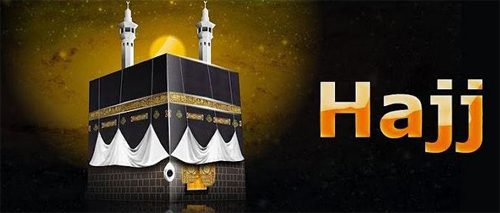
It would seem that growing up seeing pictures of the Kaabah all around, hanging somewhere in the home of seemingly every person you know, on book covers and Eid cards, computer screensavers and even jewelry, and watching the images of millions of pilgrims year after year circling the Kaabah on a small television screen would somehow lessen the effect or the shock of stepping into the Masjid al Haram for the first time and seeing the Kaabah with your own eyes…but it doesn’t! We are so used to seeing those images we almost take it for granted. It’s engraved in our memories long before we ever step off the plane in Jeddah. Any five year old Muslim child can draw a picture of the Kaabah if he is asked, and it is likely to be quite accurate. But a lifetime of seeing all those still photos or even moving pictures on a giant screen TV cannot prepare you for the feelings you will encounter seeing the Kaabah, live, up-close and in 3D! It’s like stepping into a fairytale or living inside a beautiful dream where all the emotions peak and all the senses are delighted. You’re not just looking at a photo any longer, you have actually stepped into it. You have opened the pages of history and inserted yourself into it. The initial shock is overwhelming. Some will cry and some will laugh. Some will stand in awe unable to speak. The mind instantly empties all thoughts of this life like a swollen river flowing over a cliff, and is instantly flooded with the sweetest names of Allah. There is an overwhelming sense of humbleness and humility, and an instant bond of unity with every pilgrim who has traveled from near and from far, the young and the old, the rich and the poor, all gathered in this one holy place to worship Allah and fulfill their obligation to Him, just as you are. The heart aches from the love of Allah’s messenger (PBUH) who was born in this holy city and who cried when he left it because he loved it so much. And you will love it too. Once your feet have walked in the footsteps of the prophet (PBUH), no other place in the world will ever be able to hold the same esteem in your heart or provoke the same longing in your soul as Makkah. The taste of the Zamzam water, the smell of bakhoor in the air, the voices of millions of pilgrims calling out to their Lord as they circle the Kaabah, and even the smooth, coolness of the tile touching your forehead in sujood, all provoke memories within the senses that will keep calling out to you for the rest of your life.

dua-hajjThere is really nothing anyone can tell you that can completely prepare you for the experience of Hajj. It is, as it should be, a life changing experience. It is so amazing, but not surprising that Allah in His infinite wisdom set this obligation on us, which has such a profound impact on so many aspects of our life. The fact that pilgrims from all over the world must gather in the same place at the same time to perform this duty has so much wisdom in it. Not only is the pilgrim following Allah’s order to perform the rituals of Hajj commemorating the test our Prophet Ibrahim (PBUH) went through, but it is also one of the only opportunities most Muslims will ever have to connect with the roots of Islam. The pilgrim has this golden opportunity to visit the birthplace of our Prophet Muhammed (PBUH), to feel the emotion of walking where he once walked, and to see the history of Islam face to face, becoming part of that history. This is a blessing which can never be attained by merely reading books or seeing photographs. Another overwhelming aspect is the state of Ihram itself, that every man is wearing the same two piece unstitched garment making it virtually impossible to distinguish the king from the pauper. A person’s status has been left behind, and everyone is brought to the same level of humility in front of our Creator. Just as in shaving the head, vanity is cast aside, and again, everyone is brought to the same level of humility and humbleness. It’s so hard to imagine if Allah had not made Hajj an obligation on us, most of the Muslims in the world would never have an opportunity or a reason to ever visit this holy place, or be able to experience this personal connection with our history.
Rows and rows of big white tents in every direction, this is the scene greeting the pilgrim arriving to Mina. Busy and thriving, every section like a miniature little country, where every language is heard, but at prayer time all are united in worship, standing in straight lines, facing one direction, making the same movements, praying to Allah in one language. Again, we are overwhelmed by the humility, doctors and dishwashers sleeping side by side on simple mats on the floor. Some say it’s the most productive sleep anyone will ever feel, when the body is fatigued, but the spirit is renewed and awakened. There is a new meaning to the concept of brotherhood. Friendships are forged with people we might never see again, but the experience of Hajj engraves them in our hearts and memories, guaranteeing they will never be forgotten in our du’a.

The prophet (PBUH) said that Hajj is Arafah, and keeping that in mind, the anticipation runs high on the way to this place of mercy, but nothing can prepare the pilgrim for the actual sight that greets him upon his arrival. The Jabal an-Noor appears as a tidal wave of white frothy foam coming out of the desert, every space covered by pilgrims all dressed in white, with their hands extended in the air, praying for forgiveness and mercy, some crying, some smiling, asking the Creator for their heart’s innermost desires. And while there are tents for the groups to rest in and escape the heat of the sun, most pilgrims remain standing, steadfast in their prayers, preferring the heat of the midday sun to be freed from the heat of the hellfire. The time seems to pass so quickly, trying to squeeze in a lifetime of prayers before the sun sets. And how beautiful is the sunset in this blessed place, preparing to leave for Muzdalifah, spiritually renewed and saturated in Allah’s mercy. I doubt any pilgrim would ever leave Arafah without begging Allah to allow him to return again someday.

For those of you blessed to embark upon this journey of a lifetime this year, you will carry with you a piece of the hearts of all of us who have been blessed to experience the sacred pilgrimage before you. We all long to return someday, just as the soul longs to return to its Creator. Remember to savor each moment of worship in its highest and purest form, remember us in your du’a, and may Allah make your Hajj mabrour.

What is the Udhiyah?

What is the Udhiya?

Udhiyah or animal sacrifice is an act of worship that reminds us of the great act of sacrifice that Prophets Ibrahim and Ismaeel were willing to make for the sake of Almighty Allah. 

Dr. Muzammil Siddiqi, of the Fiqh Council of North America, states:

Offering Udhiyah (sacrifice) during Eid ul Adha is regarded as wajib or mandatory according to Imam Abu Hanifah and as sunnah mu’akkadah or confirmed Sunnah according to other jurists.

All those who have the nisab (payable amount) of Zakat should offer a sacrifice. The time for offering a sacrifice begins after the Eid al Adha prayer. According to a hadith, the Prophet ﷺ is reported to have said, “Whosoever offered a sacrifice before the Eid prayer, slaughtered an animal for meat, but whosoever made sacrifice after the Eid al Adha prayer, has offered a sacrifice” (Al-Bukhari, Sahih, hadith no. 902).

Udhiyah (sacrifice) is an act of worship (ibadah). Like having the times of prayers, we also have time to make a sacrifice during Eid al Adha. The time of sacrifice remains until sunset on the 12th day of Dhul-Hijjah (according to some jurists; another opinion states the time is extended until the sunset of the 13th day). It is not required for the head of the household to offer a separate sacrifice for each family member. One sacrifice is sufficient for the entire family. However, if other family members own the nisab of Zakat, they must offer their own sacrifice. One goat, lamb, or sheep is on behalf of one person, but seven people can share in offering one cow or camel.

The Udhiyah is the Sunnah of Prophets Ibrahim, Ismaeel, and Muhammad ﷺ. This Islamic tradition reminds us of the great act of sacrifice that Prophets Ibrahim and Ismaeel were willing to make for the sake of Almighty Allah. Allah spared the life of Prophet Ismaeel, but He told us that, “And We ransomed him with a momentous sacrifice” (Quran 37: 107). The momentous sacrifice (dhibhin ‘athim) is the sacrifice of the millions of people who have been remembering this tradition for the last four thousand years. Other people who claim to follow Prophet Ibrahim have forgotten this tradition, but we Muslims have kept it alive without interruption. We must keep this Sunnah and should not forget it.

There is no substitute for Udhiyah. However, suppose one wants to offer a nafl (non-obligatory) sacrifice on behalf of oneself or one’s deceased parents or other relatives. In that case, one has a choice to make Udhiyah or give the price of the animal in charity.


     DONATE YOUR UDHIYA HERE 

What is the Reward for Hajj?

What is the Reward for Hajj?

In his famous book Fiqh-us-Sunnah, the late Egyptian scholar Sheikh Sayyed Sabiq (may Allah bless his soul) states:
Abu Hurayrah (may Allah be pleased with him) reported that the Prophet (peace and blessings be upon him) said: “The performance of `Umrah is expiation for the sins committed between it and the previous ones. And the reward for Hajj Mabrur (pilgrimage accepted by Allah) is nothing but Paradise.” (Sahih Al-Bukhari, Vol. 3, Book 27, hadith no. 1)

In another Hadith, Ibn Juraij reported on the authority of Jabir (may Allah be pleased with him) that the Prophet (peace and blessings be upon him) said: “This House of Allah (the Ka`bah) is the pillar of Islam; so whosoever heads for it with the intention of performing Hajj or `Umrah is under Allah’s Protection. If he should die (during this journey), he will be admitted to Paradise, and if he should return home safely, he will return with reward and gain.” (Al-Haythami, Majma` Az-Zawa’id)

Summary of Hajj

hajjSummary of Hajj

by Sh. Kifah Mustapha

Performing Umrah:

  1. Ihram. It is the status when someone makes the intention to enter the (Nusuk) rituals of Hajj. It is performed at the assigned (Meeqat) places chosen by the Prophet (SAAW). Men during Ihram wear only two pieces of white garments.
  2. Talbia. It is the repeated statement of submission to God during the status of Ihram. Pilgrims keep repeating it until they throw pebbles on the morning of Eid.
  3. Tawaf. It is walking around the Ka’bah seven rounds.
  4. Salat two Rak’at. It is the two Rak’at prayed behind the (Maqam) of Ibrahim (SAAW).
  5. Drinking Zamzam. It is the blessed water that came out in Makkah after the arrival of the family of Ibrahim (SAAW), Hajar (RAA), and Ismail (SAAW).
  6. Sa’ie. It is the walking seven rounds between the two hills of Safa and Marwa.
  7. Cutting hair. It is the final act of Umrah.

Performing Hajj:

  1. Ihram. (8th of Zul-Hijjah). It is the status when you wear your Ihram garment again after you are done with Umrah.
  2. Proceeding to sleep in Mina. (8th of Zul-Hijjah). You are to sleep in Mina for one night.
  3. Proceeding to Arafah. (9th of Zul-Hijjah). You are to be in the area of Arafah between noon and a little after Maghrib. This is the main Day of Hajj. Dua and supplications are to be made as much as you can.
  4. Proceeding to Muzdalifah. (9th of Zul-Hijjah). You are to arrive and pray Maghrib and Isha shortening and combining them, pick up pebbles and sleep till morning of next day.
  5. Proceeding back to Mina. (10th of Zul-Hijjah). You are to throw seven pebbles at Al-Jamra Al-Kubrah, slaughter sheep, shave hair, perform back in Makkah Tawaf with Sa’ie and return back to Mina.
  6. Sleep in Mina the two or three nights of Tashreeq. (11th, 12th, 13th of Zul-Hijjah).
  7. Throwing 21 pebbles the two or three days of Tashreeq. (11th, 12th, 13th of Zul-Hijjah).
  8. Tawaf Al-Wadaa’. It is the last Tawaf you perform before you leave Makkah.