Mosque Foundation | Bridgeview, Illinois Logo
Mosque Foundation | Bridgeview, Illinois

Mosque Foundation

One Third of the Quran

First Friday Prayer is at 12:30pm. Second Friday Prayer is at 2:00pm.

One Third of the Quran

 The Prophet (S) was reported to have said, “How is it that someone fails to read one third of the Quran in one night?!” Those present replied, “And how can one third be read?” The Prophet (S) replied, “{Say; He is Allah, One} is equivalent to one third of the Quran.”[1]Imam Qurtubi comments, “Scholars said it is equivalent to one third of the Quran because of the name Al-Samad, meaning everlasting refuge, and the name, Ahad, meaning One, for they are not mentioned but in this chapter of the Quran. And the Quran was revealed in three (categories); rulings (Ahkam,) promise (of rewards) and threat (in punishment) and names or attributes of Allah. This chapter represents the third category.”[2]

This small chapter of the Quran composed of a single line is great in its meanings and for this reason it was granted the name of Al-Ikhlas, or pure sincerity, because the text refers to Allah and no one else. It was narrated that the Prophet (S) asked about a person who recited this chapter in every rak’at Sahabah why he did so. The Companions replied that it was because of his love of this Surat to which the Prophet (S) said, “Inform him that Allah (S) loves him.”[3] And in another instance when the Prophet (S) heard someone reciting the Surah he said, “It is deserved.” The Sahabah inquired, “What is that deserved? He (S) said, “Heaven.” [4]

On many occasions the Prophet (S) would not answer questions from people and instead waited patiently for revelation to answer their questions. This particular Surah was revealed when the pagans and People of the Book asked Prophet Muhammad (S) about the description of Allah saying, “Relate to us the family line of your lord!”[5]

The nature of their question reveals their limited understanding of the Divine relating Him to human terms. Allah (SWT) challenged this way of thinking and answered them clearly and directly about Himself (SWT).

112:1 {Say: He is Allah. One.}

An order from Allah to his Prophet (S) to deliver to humanity that “Allah” is the name of the Lord, the true One to be worshiped in which all that exists submits to this fact that He is the Lord and He is One. Imam Tabari narrated to Ibn A’bbas, “He is the one that all submit to as Allah and all worship Him alone and He is the Lord over all His creation.”[6]

112:2 {Allah, the Everlasting Refuge.}

He is the One sought in all matters and no one else. Imam Tabari said, “No one is fit to be worshiped but Him.”[7] Imam Qurtubi said: “The one all matters are related to Him.”[8]

112:3 {He does not beget. Nor is He begotten.}

The rules and conditions of the human do not apply to Allah for He is the one who set such rules. The maker cannot be vulnerable to the rules of being made. And when we accept the term {One} by default there will be no place to beget or begotten. Imam Aloosi said, “Being born means to be made of parts and this contradicts the Oneness and the Everlasting Refuge attributes.”[9]

112:4 {And comparable to Him, there is none.}

All that was established in the prior verses leads to the conclusion here; no one is equivalent to Allah. Imam Qutub said, “No one is of a match or equal neither in existence or in ability or in attributes.”[10]


[1] Hadith narrated by Imam Muslim

[2] Al-Jame’

[3] Hadith narrated by Bukhari

[4] Hadith narrated by Nasaie

[5] Al-Tareekh Al-Awsat by Bukhari and the Hadith is weak.

[6] Jame’ Al-Bayan

[7] Jame’ Al-Bayan

[8] Al-Jame’

[9] Rooh El-Ma’ani

[10] Fee Zilal Al-Quran

Sh. Kifah Mustapha

El Viaje Nocturno

Glorificado sea (Allah) Quien transporto a Su Siervo durante la noche, desde la Mezquita Sagrada(de la Meca) a la mezquita lejana (de Jerusalen) cuyos alrededores bendijimos, para mostrarle algunos de Nuestros signos. El es Omnioyente, Omnividente. Sura17:1 .En el mes de Rajab, nuestro querido Profeta Mohammad (saws) tuvo un extraordinario viaje nocturno,en el tiempo cuando necesitaba consuelo al sentirse triste por la perdida de su querida esposa Khadijah (raa) y su tio Abu Talib. Una noche el profeta (saws) se encontraba cansado y sintio la necesidad de dormir,entonces se recosto cerca de la Kaba y se quedo dormido.El profeta(saws) relata que el angel Gabriel vino dos veces y lo sacudio y el (saws) no se levanto hasta la tercera vez que fue sacudido. Entonces el angel lo tomo hacia las puertas de la mezquita donde un animal (al-Buraq) cual es similar a una mula y burro con alas los esperaba. Se dirijieron hacia la mezquita en Jerusalen donde todos los profetas (Abraham, Moises, Jesus,y otros)  estaban y dirigio el grupo en oracion. Al culminar la oracion el angel Gabriel y el profeta(saws) fueron elevados mas alla del espacio, donde en cada uno de los siete cielos vio a un profeta. Finalmente alcanzo el Loto de la frontera extrema (Sidrat- al-Muntaha). Aqui fue donde los dos ultimos versos de la sura de La Vaca fue revelado 2:2285-286; tambien la primera parte del tayyiatu, cual es la conversacion entre Allah (SWAT)  el profeta (saws) y el angel Gabriel siendo testigo, ” A Allah Sea dada toda reverencia, toda adoracion y toda santidad. La paz sea contigo, oh profeta y la misericordia de Allah y sus bendiciones. La paz sea con nosotros y con los virtuosos siervos de Allah. Doy testimonio que no hay dios que Allah y doy testimonio de que Mohammad es Su Siervo y Mensajero.” Ademas en este lugar fue ordenado orar 50 veces al dia. El profeta (saws) al decender los cielos tiene una conversacion con el profeta Moises(as) cual le informa que deberia pedir la reduccion de la oracion pues seria muy dificil para los siervos del Creador. El profeta (saws) sube y le pide la reduccion de la oracion y la oracion es reducida a 40. El profeta (saws) baja y el profeta Moises(as) le dice que pida la reduccion de la oracion pues sera dificil para los siervos. Esto  continua hasta que la oracion es reducida a cinco y todavia el profeta Moises(as) le dice al profeta Mohammad(saws)que sigue siendo mucho. El profeta (saws) siente pena por pedir que la oracion sea reducida y desiste. El Misericordioso recompensara cada una de las oraciones  hecha equivalente a 10, cual tiene el valor de 50 oraciones. Alhamdulilah, Allah nos ha guiado al camino recto y nos dio esta bella accion para estar connectados con El todo el dia, cinco veces; la oracion. Allah(SWAT) nos dice en el capitulo 11:114; Y observa[ !Oh Mohammad!] las oraciones prescritas durante el dia(Fajr, Dhuhr,Asr)y durante la noche(Magrib, Isha), pues las buenas obras borran las malas. Ciertamente esto es una exhortacion para quienes reflexionan.  El viaje nocturno que el profeta(saws)experimento fue una gran bendicion para el(saws) y para nosotros.Completamos parte de nuestra fe al creer en lo no visto, y cumplir con el segundo articulo de la fe cual es la oracion. Hagamos un viaje espiritual hacia nuestro Creador, Allah,  por medio de las oraciones prescritas cual nos conducira a sentir esa paz interna en nuestros corazones y encontrar la felicidad. Amen

Understanding The Koran


A series by Sh. Ahmad Arafat every Thursday, one hour before Isha prayer  in the Mosque Foundation upper level at 7pm

key english


Understanding the Quran:

Keys to recognizing the thematic unity in the Quranic Surah

Description:

Have you ever read a whole Surah without recognizing its main purpose? Some claim that the Quranic Surah is disjointed. Such a claim can be put down to the unfamiliarity with the standards of Arabic composition and rhetoric and the inability to recognize the Quranic style. For this reason, this course is designed originally to explore the organic unity in the Quranic Surah and thereby recognize the message and purpose of the Surah as a whole. To reach this goal, more emphasis will be placed on the Arabic compositional devices and the Quranic methods in connecting different themes together. Participants will be trained to apply these devices and methods on the Quranic Surah to identify the message or messages the Surah seeks to deliver. Beyond the literary appreciation of the Quranic Surah, participants will start to establish a better relation with the Quran and to read it with new perspectives. Note: Knowledge of Arabic language is not required.

Period:

The course will continue for ten consecutive weeks.

Time:

The course will be given in English on Thursdays at 7:00 PM

Place:

Mosque Foundation, 2nd floor


My Beloved Son


Many centuries ago, a father gave a valuable piece of advice to his son. Frequently, Muslims study the first verses of Luqman’s advice and his son’s dialogue without paying close attention to the second part of the passage. Thus, I would like to take this opportunity to discuss the wisdom embedded in these two verses.

Allah ﷻ states, “My dear son! If there be something no more than the weight of a grain of mustard seed, and though it is hidden in a rock, or the skies, or the earth, Allah will bring it forth. Allah is Gracious, All-Aware” (Quran 31:16).

Luqman begins his advice to his son with the words, “My dear son,” highlighting the love and compassion Luqman expresses verbally to his son before teaching and advising him. We learn that when we seek to advise our children, our spouses, or our Muslim brothers and sisters, it must stem from a deep love and concern for them to succeed in this life and the next, and not hostility or a desire to score points. We must take the time to offer them genuine advice in person and in private, with sincere intentions to guide and support them. After capturing his son’s attention, Luqman paints the image of a tiny mustard seed misplaced in a large boulder somewhere in the heavens or the earth, hidden deep in layer beneath layer. He says, “Allah will bring it forth” quickly, with no hassle. Allah ﷻ is not only fully aware of what we do but is also precise in tracing every detail.

It is not enough to advise our children to be mindful of Allah ﷻ and to state that Allah is always watching them. We must remind them that there is nothing we can hide from Him even if we were to spend all of our time and energy burying it deep beneath the earth. Allah is aware of it and will hold us into account for it. Luqman raises his son’s awareness of Allah’s knowledge that encompasses everything and makes him conscious of His precision in exposing all sins. The image of the weightless mustard seed juxtaposed to the vast skies and earth inspires both awe and fear.

After trusting in Allah’s justice, who does not allow a single mustard seed to escape His punishment, Luqman admonishes his son to establish prayer, “My dear son! Attend regularly to prayer, and enjoin the doing of what is right and forbid the doing of what is wrong, and endure with fortitude whatever befalls you. These are matters that require strong resolve” (Quran 31:17). He does not tell his son to pray; he says to ‘establish prayer,’ making it a solid foundation that structures his entire life. Salat reminds us of our duty to Allah ﷻ and of the day when all sins, however small, however hidden, will be exposed and judged.

An individual who establishes prayer and is conscious of Allah’s justice and judgment enjoins that which is right and forbids evil. It is not enough to establish prayer; prayer must influence our interactions and dealings. If our salat does not affect every part of our daily lives, it is merely a ritual with no significance.

Luqman advises his son to endure, with fortitude, what befalls him and be patient and firm when tested. Luqman knows that enjoining right and forbidding evil is a lonely road taken by a few, and one which requires a strong relationship with Allah ﷻ.

May Allah ﷻ make us among those who establish regular prayer, enjoin what is good and forbid what is evil, and may He give us the strength and patience to do so.

Sh. Jamal Said


The Power of Gratitude: Part1

Why We Thank Allah

In his magnificent, spacious palace, Harun al-Rasheed was sitting with Ibn al-Sammak, one of the most pious scholars of his time. Suddenly, Harun felt thirsty and asked one of his servants to bring him a cup of water. As Harun was about to drink, Ibn al-Sammak wanted to use this opportunity as a teaching moment. 

 “May I ask you a question?” Ibn al-Sammak interrupted Harun. 

“Definitely,” answered Harun. 

 “Imagine if you cannot find this water anywhere, how much money would you pay to get it?” asked Ibn al-Sammak.

“Half of my wealth,” answered Harun al-Rasheed. 

 “Drink it. May Allah make it healthy for you!” Ibn al-Sammak sincerely prayed.

 “May I ask one more question?” asked Ibn al-Sammak as Harun finished drinking. 

 “Definitely!” replied Harun. 

 “How much money would you pay if this water could not be released from your body?” asked Ibn al-Sammak. 

 “I would pay all my wealth!” answered Harun without any hesitation. 

 Upon this, Ibn al-Sammak took this incident as an opportunity to advise Harun: “Do not rejoice much for your kingdom that is not worth a cup of water!” 

       Some of us may not pay attention to the fact that we are blessed in many areas, and thus, we feel sorry for what we miss rather than feel grateful for what we have. This is why the Quran describes the grateful as “few.” The Quran reads: “And few among my servants are truly thankful” (Quran 34:13). One day, Umar heard a man praying: “My Lord, make me among the few.” “What do you mean?” asked Umar. The man replied: “O Commander of the Believers, Allah said [about Noah]: “None believed him except few” (Quran 11:40). And Allah said: “And few among my servants are truly thankful” (Quran 34:13). And Allah said: “Except for those who believe and do good deeds—and how few they are!” (Quran 38:24).

How does the Quran view gratitude?

         Did you know that Allah grouped people into two categories: the grateful and the ungrateful? “We showed man the right Way to be either grateful or ungrateful” (Quran 76:3). Did you know that we will be questioned about God’s blessings? Allah says: “Then you shall be questioned about the delights [you enjoyed in this life]” (Quran 102:8). Did you know that one of the reasons why Allah created day and night is for us to recognize His power and give thanks to Him? Allah said: “And it is He [Allah] who has made the day and night successive for whoever wants to remember [Allah’s power] and to be thankful [to Allah]” (Quran 25: 62). Did you know that giving thanks to Allah is one of the reasons why He created us? Allah highlights the value of gratitude as a demonstrating act of worship. “O ye who believe, eat from the good that Allah provided for you and give thanks to Him if you truly worship Him alone” (Quran 2:172). 

          Imam ibn al-Qayyim adds: “Allah, the Most Exalted, mentions that gratitude is the goal of Creation and Decree. Moreover, it is the task Allah created us for. Allah said: “And Allah has brought you forth from the bellies of your mothers [while] you knew nothing. And He made for you the [senses of] hearing, sight, and understanding, so that you may give thanks” (Quran 16:78). Furthermore, Allah mentions that “giving thanks” is the goal of sending the prophets. Allah says: “As we sent for you a messenger [Muhammad] from your selves, reciting our verses unto you, purifying you, teaching you the Book and Wisdom, and teaching you what you did not know before. So, remember me, and I shall remember you and be thankful to me and do not be ungrateful” (Quran 2:151-152). When Satan knew the importance of gratitude, he committed himself to turn people ungrateful. The Quran reveals Satan’s plan to spare no effort to mislead people into ungratefulness: “Then I shall come to them from before and from behind, from their right, and left, and you will not find the greater part of them thankful” (Quran 7:17). 

Why do we have to thank Allah regularly?

      The simple answer to this question is that we would not exist without Allah, and without Allah, we would not survive. In other words, we owe Allah both our existence and our sustenance. Even though they are countless, Allah’s blessings can be grouped under three main categories: the blessing of creation, the blessing of sustenance, and the blessing of faith. 

Regarding the first category, the Quran reminds us: “Has there not been for man a long period, when he was nothing – (not even) mentioned?” (Quran 76:1). As we remember the beginning of our life through the biological process we know, one must demonstrate humility before God. The Quran records one’s rebellion against God as something unexpected, especially when one considers the creation process: “He [God] created man from a sperm-drop; then suddenly, he is a clear adversary” (Quran 16:4). Instead of surrendering to God and worshipping Him humbly, some rebel, and others go further to deny Him! Thinking about the first moments and years of life is enough to motivate us to recognize our essential needs and weaknesses. When Allah perfects our senses as we age, we should be more grateful as a deeply felt inner truth, not be ungrateful due to unjustified arrogance or heedlessness. 

Reflecting on how God supports our survival leads us to the second category of the divine blessings on us. Try to rethink the following examples of basic divine blessings. Did you know that the average adult at rest inhales and exhales 11,000 liters of air a day which requires 550 liters of pure oxygen per day? What about the eyes? Bakr ibn Abdullah said: “If you want to know how much Allah blessed you, close your eyes.” Now I am not asking you to close your eyes for a day or an hour. Do it for one minute, and you will realize how great this blessing is.  Have you ever considered the water you drink? Have you ever considered the blessing of the day and night? These are quranic questions. 

Have you considered the water which you drink?

Is it you that sends it down from the clouds, or are We the senders?

If We pleased, We would have made it salty; why do you not then give thanks? (Quran 56-68:70).

Say, “Have you considered: if Allah should make for you the night continuous until the Day of Resurrection, what deity other than Allah could bring you light? Then will you Say, “Have you considered: if Allah should make for you the day continuous until the Day of Resurrection, what deity other than Allah could bring you a night in which you may rest? Then will you not see?” And out of His mercy, He made for you the night and the day that you may rest therein and [by day] seek from His bounty and [that] perhaps you will be grateful (Quran 28:71-73).

        Considering these fundamental blessings, why would many people turn ungrateful or forget to thank God regularly even though they will not trade God’s blessings, such as sight, for anything? One of the answers Imam al-Ghazali provides is that people think that countless people enjoy such divine benefits, and thereby they do not feel special! To counter this sign of heedlessness, we need to recognize that every blessing we enjoy is unique for each of us. Do not wait till you lose the blessing and then wish to gain it back and feel grateful. 

           The blessings of Allah reach their climax with the blessing of faith and guidance. This is the only way of making sense of life itself. Humans are not machines, as atheists argue. Since we can think and recognize immaterial values like love, beauty, truth—we must have something beyond the material. To believe that we are only a material product is self-contradictory, simply because if we can think, then we must have something immaterial as thinking is an intangible activity. 

          Through faith, believers lead a balanced, meaningful life as they meet their souls’ needs by communicating with God and receive answers to the essential questions on life: from where, why, and to where? How would any person lead a stable life without knowing the answers to these questions? To us, the Quran answers the three questions in one short verse: “And why should I not worship He who created me and to whom you will be returned? (Quran 36:22).

the quran counts islam as a divine favor: “this day i have perfected for you your religion and completed my favor upon you and have approved for you islam as religion” (quran 5:3). imam ibn al-qayyim notes: “lay-people thank god for the blessings of food, drinks, and health; yet, the special people extend their gratitude to focus on the blessings of monotheism, faith and food of the heart!” 

Such were a few examples of blessings without which our life would be impossible, challenging, and meaningless. Imagine if you helped someone survive for a month or two; yet, instead of giving you credit for their survival, they are ungrateful. Would that be normal or expected? Accordingly, it is human to thank anyone for whatever good they do for us. God is beyond all comparison, but since we owe Him our existence and our survival, we express our gratitude to Him in the form of worship. 

Imagine there was no afterlife taught by the prophets,

And that the burning coals were not inflamed,

Would it not be a solemn duty

For the servants to praise the Bestower?

هب البعث لم تأتنا رسله … وجاحمة النار لم تضرم

 أليس من الواجب المستحق … ثناء العباد على المنعم


WE ASK ALLAH TO MAKE OUR HEARTS FULL OF GRATITUDE AND HOPE. AMEEN.


By Sheikh Ahmed Arafat
 

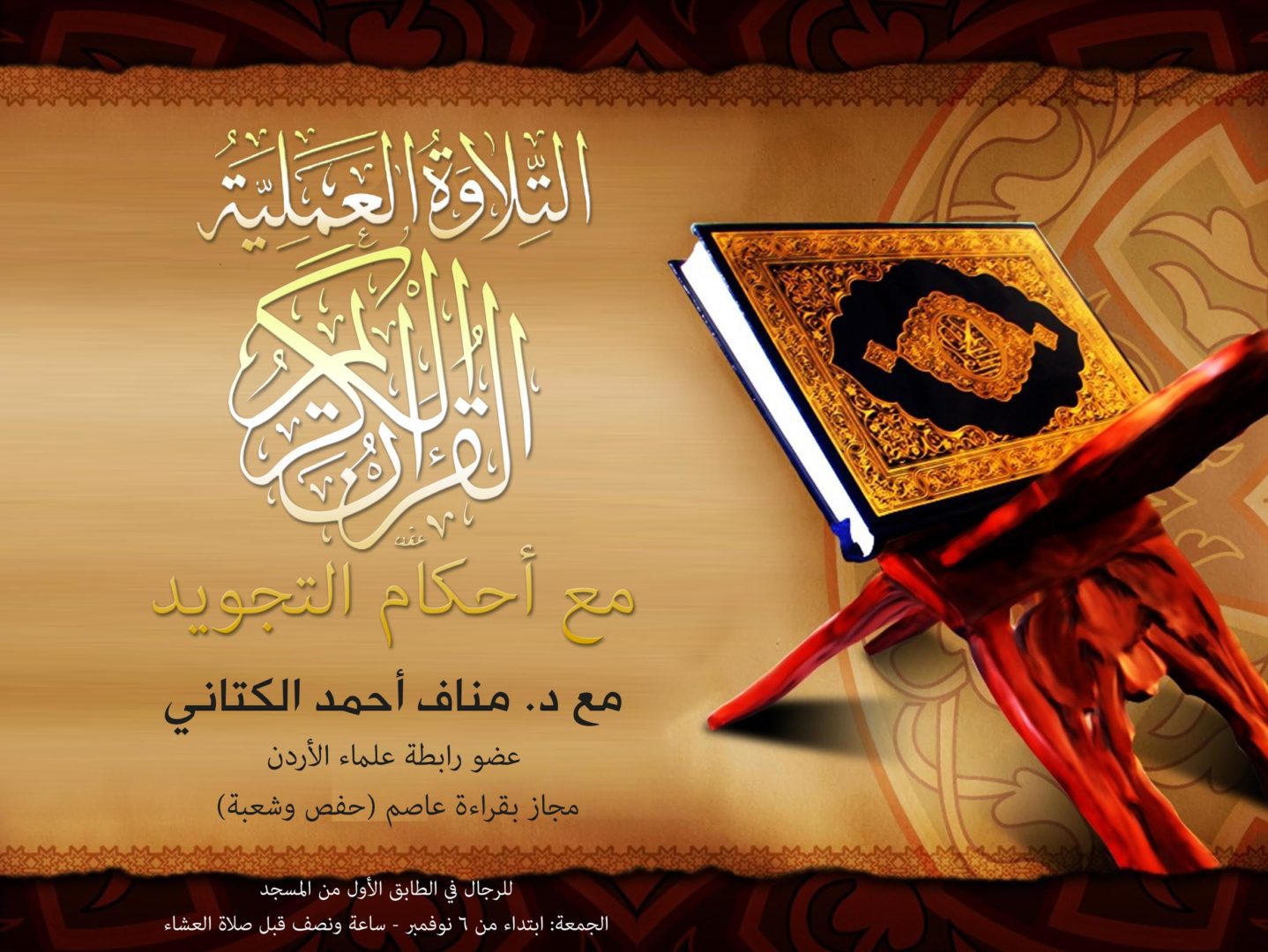
التلاوة العلمية


p2


التلاوة العلمية:  مع أحكام التجويد مع الكتور مناف أحمد الكتاني . للرجال في الطابق الاول في المسجد

.الجمعة ابتداء من 6 نوفمبر ساعةو نصف قبل صلاة العشاء

Active Interfaith Involvement of Mosque Foundation

The Mosque Foundation Interfaith Committee has been busy during this past spring and summer and it is gearing up for another year of activity and dialogue. We would love you to join in on the efforts of volunteering, dialogues, and advocating good community efforts in an interfaith forum –for women and men and youth community unity. If you are interested please Contact MF Interfaith Chair, email is below for more information.

This past spring, the St. Fabian & Mosque Foundation Women’s Dialogue held another annual Potluck Dinner inviting women of all faiths to share a meal and good conversation breaking through the barriers that separate us and finding common ground in caring for the earth. The theme this past spring was as always, Building Bridges for Common Ground. The guest presenter was Presbyterian Minister and founder of Grace Seeds Ministry Pastor Linda Wygant who educated and guided a hands-on activity about sustaining green life on earth and how we can and should advocate for green legislation.

The dialogue between the women of the Mosque Foundation and St. Fabian Catholic Church in Bridgeview is now heading into its 18th year and has recently been selected by the Catholic Association of Diocesan Ecumenical and Interreligious Officers (CADEIO; a national organization) to represent this model of sustainable dialogue at this year’s upcoming Parliament of World Religions Conference, October 15-19 in Salt Lake City, Utah. CADEIO will be partial sponsor for two women ($1,000), Paula Daley from St. Fabian Catholic Church and Karen Danielson from the Mosque Foundation to speak on panel at this year’s PWR Conference. Congratulations to both the Mosque Foundation and St. Fabian Catholic Church for this very special recognition.  This year’s PWR will feature a global spectrum of speakers from the Dali Lama to Tariq Ramadan. The Parliament is the oldest, the largest, and the most inclusive gathering of people of all faith and traditions. The first Parliament took place in 1893. Since, this historic event has taken place in Chicago, USA • Cape Town, South Africa • Barcelona, Spain • Melbourne, Australia – and now in Salt Lake City, Utah! Check out their website at http://www.parliamentofreligions.org the Global Interfaith Movement.


Next kicking-off summer activities, the MF Interfaith team went into full force assisting in the MF 14th Annual Ramadan Iftar. Keynote address by the Reverend Dr. Robert Reynolds, Executive Presbyter for the Presbytery of Chicago, was a deep reflection of racial and interfaith harmony in light of #BlackLivesMatter. Also included in the evening was the presentation of several awards. Community Service Award went to Bridgeview, Police Chief Walter Klimek for his efforts in keeping our neighborhood and all of Bridgeview safe particularly this past year. The Friendship Award went to the Oak Lawn Clergy and Religious Workers Association for reaching out to the MF community on all levels including solidarity in the face of hate, community dinners and a new dialogue (mentioned below). The Leadership Awards went to two well recognized leaders of the MF community, Dr. Abdul Amine, Universal School and Dr. Mahmoud Ismail, Aqsa School. The iftar was well attended by other officials and leaders both civic and religious as well as neighbors and long-time friends of the MF

The MF Interfaith team has been participating in several activities with the Oak Lawn Clergy and Religious Workers Association. A representative attends all advisory board meetings with the association every month between September and May from which bi-monthly dialogue meetings have been initiated. If you would like to observe the dialogue meetings and get involved they are open to members of participating congregations and are held at the Oak Lawn Library. Look for announcements or Contact MF Interfaith Chair, email is below. This summer we coordinated with the Association three OneCommunityOneMeal dinners fully sponsored by participating congregations at the Menard Center (Oak Lawn Park District). These dinners are offered to community members who have become homeless, feel lonely and need company, as well as congregation members and even officials. Volunteers sit to eat with guests and share in some community spirit together. If you would like to participate in these meals please reach out to the MF Interfaith team -Contact MF Interfaith Chair, email is below.

The newest interfaith engagement for the MF Interfaith team is its recent joining to SWIFT (South West InterFaith Team). Congregations from Tinley, Orland, Frankfurt and other surrounding suburbs form one of the largest interfaith groups in Illinois. Its mission is to promote dialogue among Christian, Muslim and Jewish communities, to work together on common community projects and to promote mutual respect and understanding. Every month there is activity. Check out www.swiftinterfaith.org  or for more information contact MF Interfaith Chair, email is below. Sunday October 11, 2015 we will be packaging meals for HungerVan a non-profit organization that delivers healthy meals to needy individuals, institutions and the homeless. It is a drive against hunger! We need more volunteers and donations ($5 per meal) the more donations, the more meals to deliver! Contact MF Interfaith Chair.

In addition to MF Interfaith community activity, this year, as for many years, the MF is represented in the CIOGC’s Interfaith Committee engaging in city-wide Catholic, Presbyterian, Methodist, and Jewish dialogues and dinners. And finally, the MF Interfaith Chair Karen Danielson for her work on the Gift of Hope Illinois Interfaith Council and the development of the Islamic Perspective on Organ Donation brochure has been selected as a 2015 Lifesaving Partner by Gift of Hope Organ & Tissue Donor Network. A special ceremony to recognize her contributions is planned forFriday, October 9, 2015. For more information about the MF Interfaith team or if you’re looking to get involved please contact the MF Interfaith Chair, Karen Danielson, kdanielson@mosquefoundation.org.

New Class on Spiritual Development


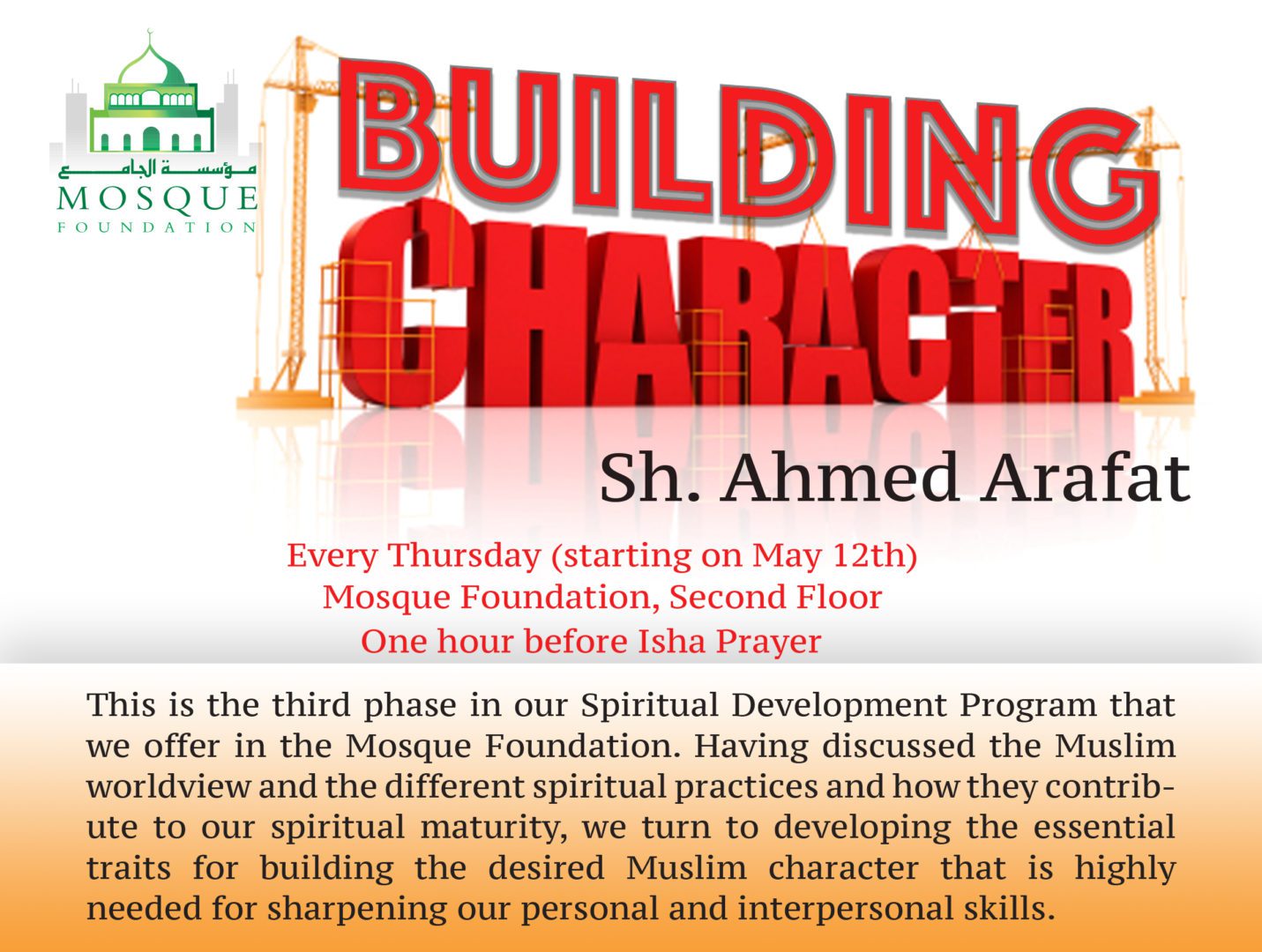
A New Class on Spiritual Development

This is the third phase in our Spiritual Development Program that we offer in the Mosque Foundation. Having discussed

the Muslim worldview and the different spiritual practices and how they contribute to our spiritual maturity, we turn to

developing the essential traits for building the desired Muslim character that is highly needed for sharpening our

personal and interpersonal skills.


When: Every Thursday (starting on May 12th)


Where: Mosque Foundation, Second Floor 


building 

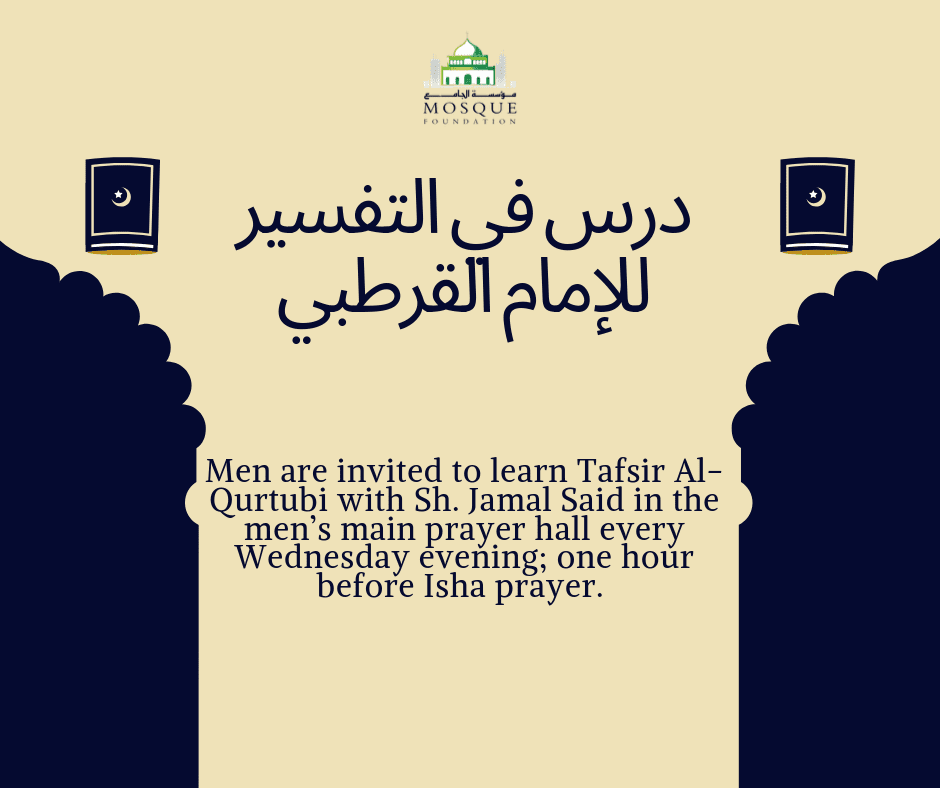
Tafsir Al-Qurtubi

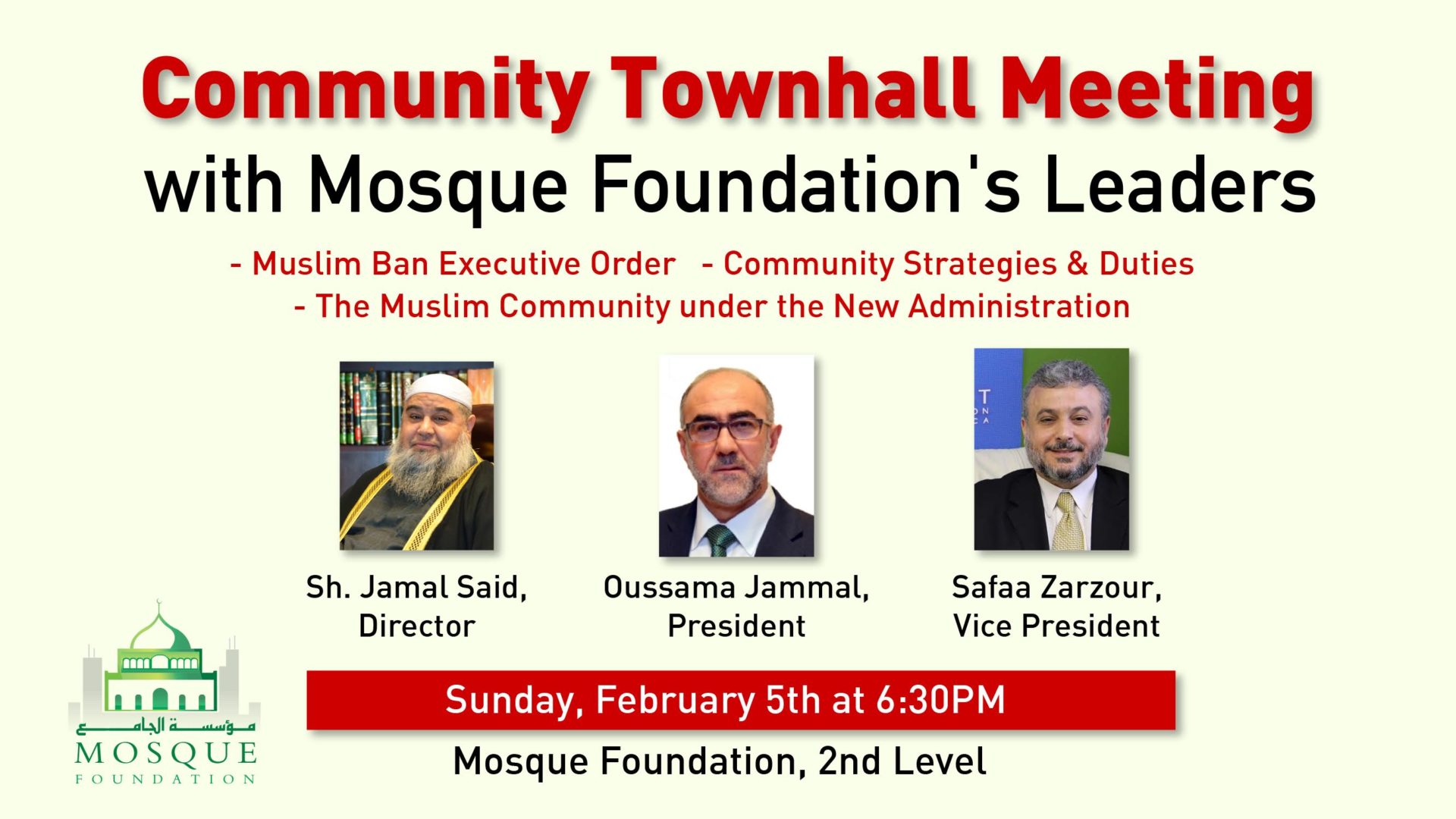
Town Hall Meeting

townhall

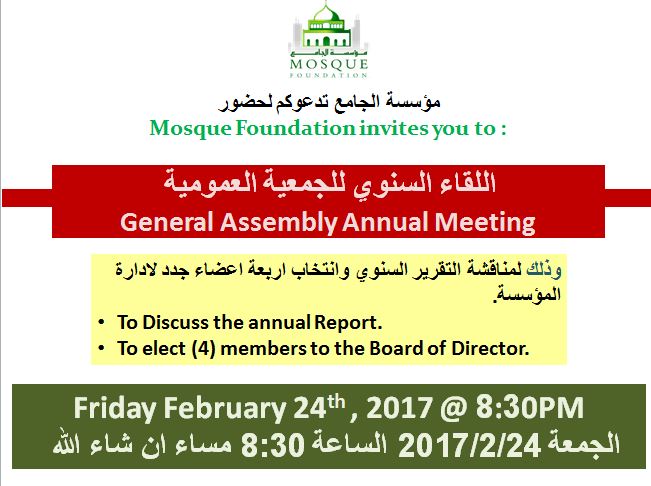
General Assembly Meeting


General Assembly Meeting . Friday Feburaury 24, 2017 @ 8:30pm

assembely

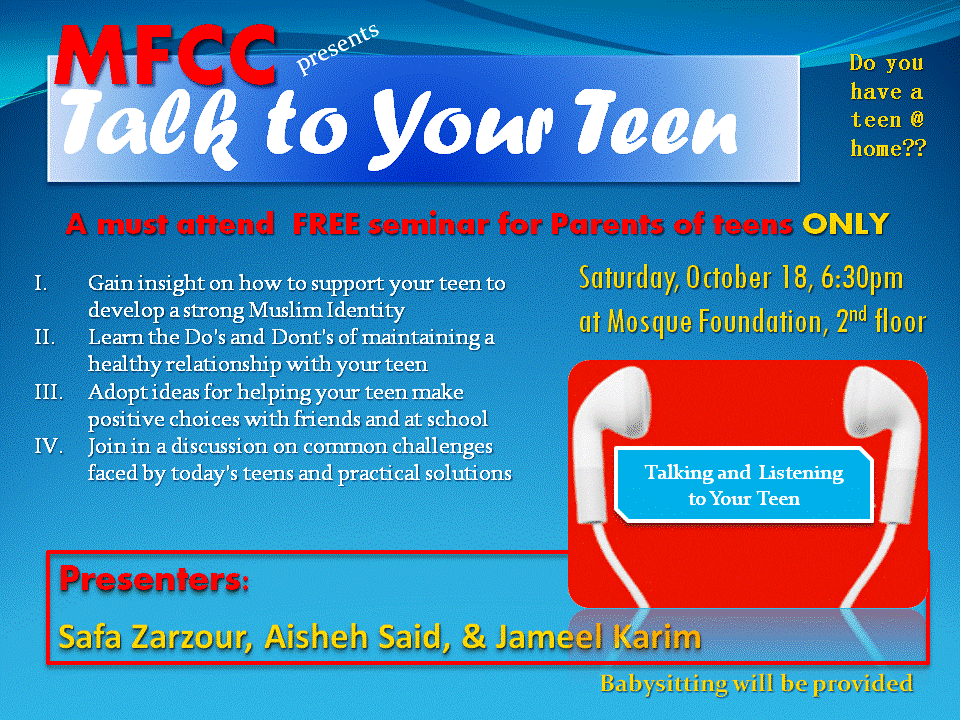
Talk to Your Teen Seminar

 Talk to Your Teen
 
The MFCC was glad to host a free event for community parents on Saturday, October 18, 2014 at the Masjid. During the “Talk to Your Teen ” program, parents heard from a panel of speakers on challenges unique to Muslim teenagers as well as practical strategies for healthy communication between teens and their parents. Sister Aisheh Said delved into a discussion describing changes typical to adolescence and suggestions for approaches when speaking to teens about what matters most to them. She advised parents to listen more than lecture and offer teens safe opportunities to express their emotions. Brother Safaa Zarzour presented a thought-provoking argument on the importance of instilling morals and values into children as early as possible explaining that the window of influence starts to close during early childhood. He encouraged parents to allow their teens to make mistakes and use those moments to support learning and personal growth. Brother Jameel Karim implored audience members to spend more time with their teens and be present in their lives, not just as parents, but also as mentors and role models. He reminded parents that many industries and pressures were competing for the attention and interest of their children. Emcee Sister Banan Said depicted common problems faced by parents of teenagers and quick tips on dealing with them throughout the night including structuring cellphone use for teens. She capped the evening with presenting audience members with a Parenting Skills Inventory for parents to score themselves on their communication skills with their teens. Audience members voiced a need for more programs for teens and their parents and were pleased to spend the night at their Masjid discussing ways to support the most important people in their lives, their children.
 
Talking to your teen